

Key Takeaways
Why Window Energy Myths Are So Persistent
Energy-efficient windows are one of the most discussed home improvement topics — and one of the most misunderstood. Salespeople, neighbors, and well-meaning online articles each repeat slightly different versions of the same claims until they start to feel like facts. For homeowners weighing a significant investment, those myths can lead to either unrealistic expectations or unnecessary hesitation.
The truth is more nuanced than either extreme. Energy-efficient windows can deliver meaningful comfort and utility savings, but only when you understand what they can and cannot do. This article addresses the most common misconceptions directly, drawing on how windows actually perform rather than how they're often marketed.
For a broader foundation, see our full overview of window energy efficiency — it covers ratings labels, frame types, and installation from start to finish.
Myth
Energy-efficient windows will pay for themselves within a few years through lower energy bills.
Fact
Payback periods typically range from 10 to 30 years and depend heavily on climate, fuel costs, and the condition of the windows being replaced.
The idea of a quick payback is appealing, but the math rarely supports it. According to the U.S. Department of Energy, windows account for roughly 25–30% of residential heating and cooling energy use — but that figure assumes single-pane or significantly degraded windows. If your existing windows are already double-pane and in reasonable condition, the incremental savings from upgrading will be modest.
Payback also depends on local energy prices, which vary considerably across the country, and the number of windows you're replacing. For a realistic picture of cost versus long-term return, our article on separating window replacement myths from real numbers breaks down the evidence carefully.
Myth
Any window labeled ENERGY STAR will perform the same as any other ENERGY STAR window.
Fact
ENERGY STAR certification sets minimum thresholds for a climate zone — products at the low and high ends of the certified range can perform very differently.
ENERGY STAR certification means a window meets specific U-factor and SHGC benchmarks for your region. However, there's a wide performance range within certified products. A window that barely clears the threshold and one that exceeds it substantially will behave differently in real conditions, especially in extreme climates.
Beyond the glass, installation quality can override ratings entirely. A highly rated window installed with gaps, missing flashing, or improper sealing can perform worse than a lower-rated product installed carefully. See where energy loss actually occurs during installation for detail on what proper technique prevents.
Myth
Triple-pane windows are always worth the extra cost over double-pane.
Fact
Triple-pane windows offer meaningful benefits in very cold climates but often provide diminishing returns in moderate or mild regions.
Triple-pane glass adds a third layer of insulation and typically achieves lower U-factors than double-pane. In regions with harsh winters, that performance difference can justify the higher upfront cost. But in the southern United States or mild coastal climates, the energy difference between good double-pane and triple-pane windows may be too small to recover the cost premium over a reasonable timeframe.
Triple-pane windows are also heavier, which can stress frames and hardware over time. Our comparison of double-pane vs. triple-pane windows by climate walks through how to match glazing choice to your actual conditions rather than defaulting to the higher-spec option.
Myth
New energy-efficient windows will eliminate drafts and cold spots near windows.
Fact
High-quality windows reduce conductive and radiant heat loss significantly, but air leakage from poor installation or adjacent wall gaps can persist independently.
Drafts near windows can come from multiple sources: the glass itself, the frame, the interface between frame and rough opening, or gaps in the surrounding wall assembly. A new window addresses the glass and frame — but if the installation isn't properly air-sealed, or if wall insulation is deficient nearby, you may still feel cold air movement after replacement.
This is why the installation process matters as much as the window specification. Homeowners sometimes replace windows expecting complete draft elimination and are surprised when some cold-sensation persists near the floor or corners. Managing that expectation — and asking your installer specifically about air sealing — helps avoid disappointment.
Myth
Condensation forming on new energy-efficient windows means they're defective.
Fact
Surface condensation on the interior of new windows often signals that the glass is now colder than before — which is actually a sign of improved insulation.
This one surprises many homeowners. When you install a window with a lower U-factor, the interior glass surface stays closer to room temperature — which means it's less likely to cause condensation than older, less insulating glass. But if interior humidity is high, you may actually see more condensation on adjacent walls or surfaces where cold spots remain.
Condensation between the panes, however, is a different matter — that indicates a failed seal and requires attention. Our article on condensation on new energy-efficient windows explains how to tell the difference and when to contact your installer.
What These Myths Mean for Your Replacement Decision
Cutting through these misconceptions has practical consequences. Homeowners who expect immediate, dramatic savings may feel disappointed and question whether the upgrade was worth it. Those who believe all certified windows perform equally may underestimate how much installation and frame choice matter.
A realistic approach starts with your home's specific situation: the age and condition of your current windows, your local climate, and how much of your heating and cooling budget is actually lost through glass versus other envelope weaknesses like attic insulation or door seals. Windows are one piece of the system.
Frame materials deserve particular attention. How frame material affects energy performance is a factor many homeowners overlook entirely when comparing window quotes. Vinyl, fiberglass, and wood frames conduct heat at different rates — that difference shows up in your home's comfort and your energy bills over time.
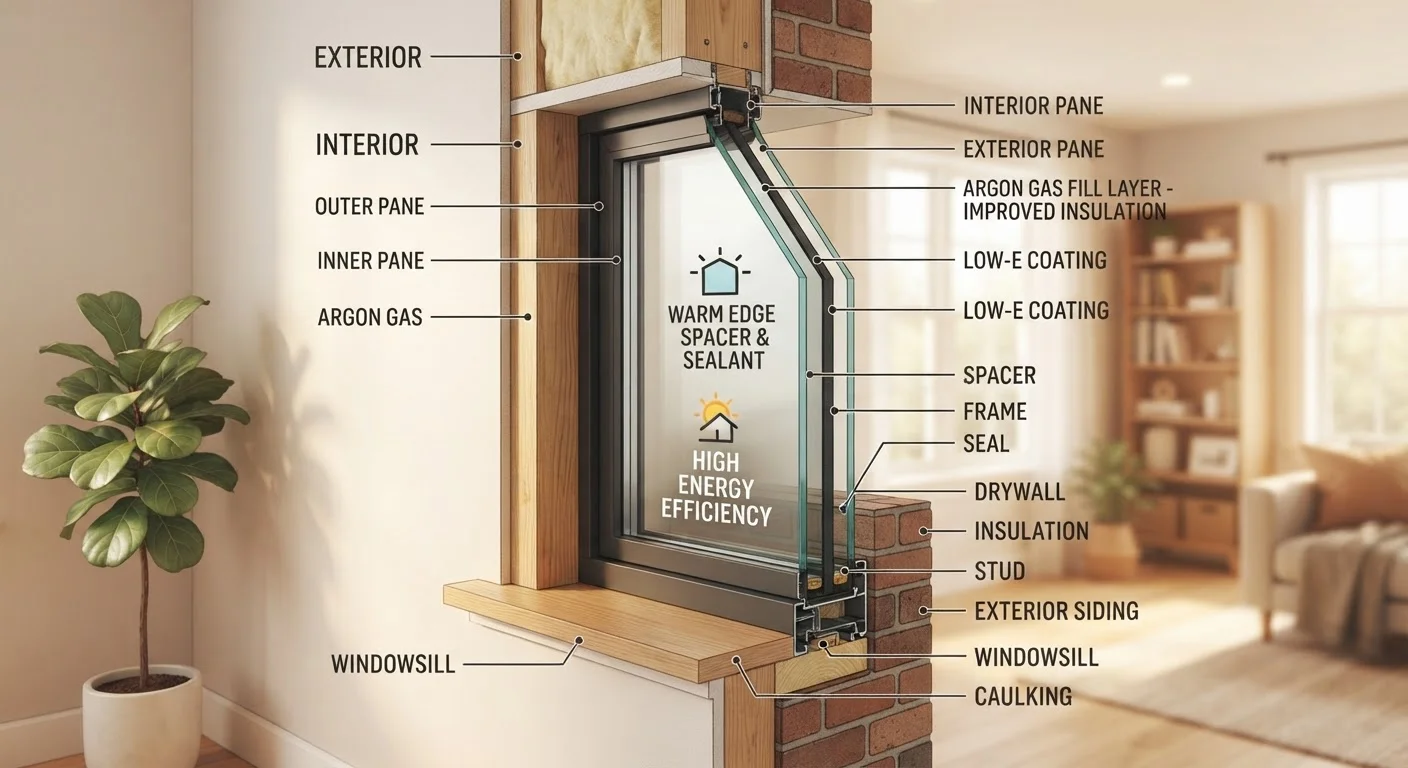
Similarly, the spacer bar between glass panes is rarely discussed in sales conversations, yet it contributes meaningfully to edge-of-glass heat loss. Our guide to warm-edge spacers explains what to look for when evaluating window specifications.
Don't Overlook Installation When Comparing Quotes
A lower-priced quote that skips proper air sealing, flashing, or insulation around the frame can undermine even the highest-rated window. Before accepting any proposal, ask the contractor specifically how they handle the rough opening and what air-sealing materials they use. Poor installation is one of the leading reasons homeowners don't see expected energy savings after replacement.
Finally, if a contractor's claims sound too good to be certain — guaranteed payback in two years, complete draft elimination, zero condensation — it's worth understanding how to evaluate window energy claims versus marketing language before signing anything. An informed homeowner is a protected homeowner.