

Key Takeaways
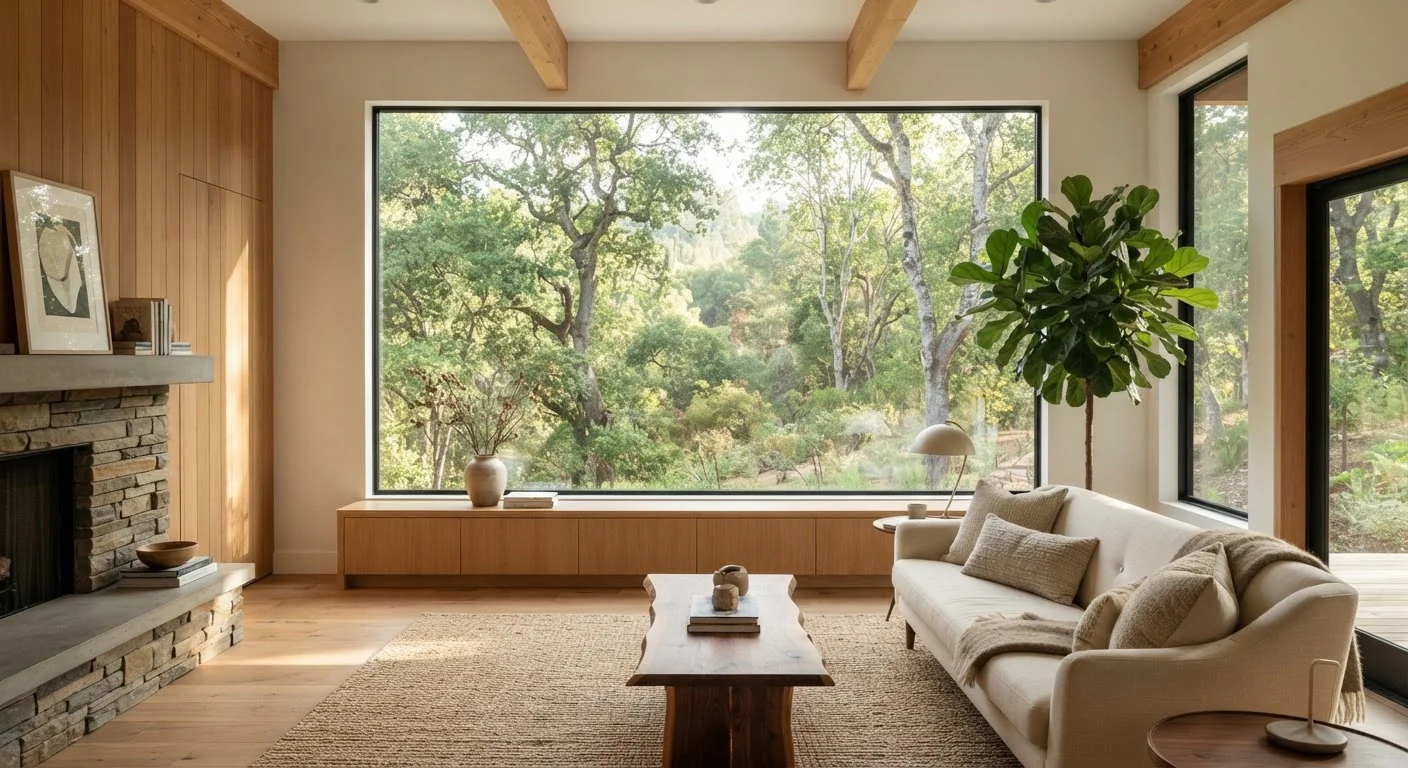
Unobstructed, panoramic views with no hardware interruption
Because there are no sashes, cranks, or meeting rails, the entire glass area is clear. This matters most when the goal is to frame a landscape, courtyard, or architectural feature.
Superior airtightness compared with operable windows
Fixed windows have no movable seams where air can infiltrate. This typically results in lower air leakage rates, which contributes to more stable indoor temperatures and reduced energy load.
Lower purchase and installation cost for equivalent size
Without operating hardware, balances, or crank mechanisms, picture windows are simpler to manufacture. For large openings, the cost difference relative to an operable window of the same dimensions can be significant.
Minimal ongoing maintenance requirements
There are no moving parts to lubricate, no hardware to adjust, and no seals around operable sashes to replace over time. Cleaning is straightforward — one fixed pane, inside and out.
Maximizes natural light intake in any room
A large, uninterrupted pane captures more usable daylight than a same-sized operable window divided by sash rails and hardware. This can reduce reliance on artificial lighting during daylight hours.
Zero ventilation — the window cannot be opened
This is the defining limitation. In rooms where natural airflow matters — such as kitchens or bedrooms — relying solely on a picture window means the space will depend entirely on mechanical ventilation or adjacent operable windows.
Emergency egress requirements may restrict placement
Building codes in most U.S. jurisdictions require at least one operable egress window in every sleeping room. A picture window cannot fulfill this requirement. Always verify local code before specifying window types for bedrooms.
Large glass area increases solar heat gain risk
Without proper low-emissivity (low-e) glazing or exterior shading, a south- or west-facing picture window can overheat a room in summer. Glazing specification is especially important for large fixed panes.
Exterior cleaning is more difficult on upper floors
Because the glass does not tilt inward or swing open, cleaning the exterior surface of a picture window on a second story or higher requires a ladder or professional window cleaning service.
Replacement glass logistics can be complex
Large-format fixed panes are heavier and less standard than common operable window sashes. If the glass is damaged, sourcing and installing a replacement requires specialist handling and may take longer than smaller units.
Our Verdict
Picture windows deliver exceptional views, strong thermal performance, and lower upfront costs compared with operable alternatives of the same size. The fixed design is a genuine trade-off, not a flaw — it only becomes a problem when ventilation needs are not accounted for in the overall window plan. Homeowners who address airflow through other windows or mechanical systems will rarely miss the ability to open them.
Ideal for homeowners who want to maximize a scenic view or flood a room with natural light, and who have adequate ventilation provided by other windows or an HVAC system.
What Makes a Picture Window Different
A picture window is a fixed, inoperable window — it is sealed into the frame and does not open. Unlike double-hung, casement, or awning windows, there are no moving sashes, hinges, or cranks. The entire opening is a single, uninterrupted pane of glass.
That simplicity is both its strength and its constraint. Because there are no operable components, picture windows can be manufactured in much larger sizes than most operable styles without structural compromise. They are commonly used in living rooms, great rooms, and anywhere a homeowner wants to frame an outdoor view as though it were a painting on the wall.
For a broader comparison of fixed versus operable designs across insulation, ventilation, and cost, see our guide to fixed vs. operable windows.
Where Picture Windows Work Well
Picture windows perform best in specific situations. The most obvious is a room with an exceptional outdoor view — a mountain range, a garden, a body of water — where interrupting the sightline with hardware would diminish the effect. They also work well in spaces where light is the priority and ventilation is handled elsewhere, such as a stairwell, a hallway, or a living room served by adjacent operable windows.
They are also well suited to spaces where air quality is managed mechanically. If your home has a modern HVAC system with controlled fresh-air intake, the absence of an operable window is rarely a day-to-day inconvenience. Read more about how mechanical and natural approaches compare in our article on natural vs. mechanical ventilation.
Finally, picture windows are a practical choice for difficult-to-reach locations — high on a wall, above a fireplace, or in a cathedral ceiling — where opening a window would be impractical regardless.
Unobstructed, panoramic views with no hardware interruption
Because there are no sashes, cranks, or meeting rails, the entire glass area is clear. This matters most when the goal is to frame a landscape, courtyard, or architectural feature.
Superior airtightness compared with operable windows
Fixed windows have no movable seams where air can infiltrate. This typically results in lower air leakage rates, which contributes to more stable indoor temperatures and reduced energy load.
Lower purchase and installation cost for equivalent size
Without operating hardware, balances, or crank mechanisms, picture windows are simpler to manufacture. For large openings, the cost difference relative to an operable window of the same dimensions can be significant.
Minimal ongoing maintenance requirements
There are no moving parts to lubricate, no hardware to adjust, and no seals around operable sashes to replace over time. Cleaning is straightforward — one fixed pane, inside and out.
Maximizes natural light intake in any room
A large, uninterrupted pane captures more usable daylight than a same-sized operable window divided by sash rails and hardware. This can reduce reliance on artificial lighting during daylight hours.
Where the Trade-Off Works Against You
The inability to open a picture window stops being theoretical the moment a room needs fresh air and has no other way to get it. Kitchens, bathrooms, and bedrooms are the locations where this limitation is most likely to create problems. Cooking odors, humidity, and stuffiness accumulate quickly in rooms that rely solely on mechanical ventilation — and if that system underperforms, there is no fallback.
Egress is the other hard constraint. Most U.S. building codes require sleeping rooms to have at least one window large enough for occupants to escape and rescuers to enter. A fixed picture window cannot meet that requirement regardless of its size. Always verify what your local jurisdiction requires before specifying window types in a bedroom context.
Egress Code Requirements Apply to Bedrooms
U.S. residential building codes generally require that sleeping rooms have at least one window that meets minimum egress dimensions — typically a minimum net clear opening area, height, and width — so occupants can escape in an emergency. A picture window, being fixed, cannot satisfy this requirement. Before choosing a picture window for any room that will be used as a bedroom, consult your local building department to confirm what is required. Requirements vary by jurisdiction and are updated periodically.
Solar heat gain is a subtler concern. A large south- or west-facing picture window without appropriate low-emissivity (low-e) glazing can cause significant overheating on warm, sunny days. Glazing selection matters more for picture windows than for smaller operable units — see our overview of energy-efficient window facts and myths for context on what glazing ratings actually mean in practice.
Zero ventilation — the window cannot be opened
This is the defining limitation. In rooms where natural airflow matters — such as kitchens or bedrooms — relying solely on a picture window means the space will depend entirely on mechanical ventilation or adjacent operable windows.
Emergency egress requirements may restrict placement
Building codes in most U.S. jurisdictions require at least one operable egress window in every sleeping room. A picture window cannot fulfill this requirement. Always verify local code before specifying window types for bedrooms.
Large glass area increases solar heat gain risk
Without proper low-emissivity (low-e) glazing or exterior shading, a south- or west-facing picture window can overheat a room in summer. Glazing specification is especially important for large fixed panes.
Exterior cleaning is more difficult on upper floors
Because the glass does not tilt inward or swing open, cleaning the exterior surface of a picture window on a second story or higher requires a ladder or professional window cleaning service.
Replacement glass logistics can be complex
Large-format fixed panes are heavier and less standard than common operable window sashes. If the glass is damaged, sourcing and installing a replacement requires specialist handling and may take longer than smaller units.
Combining Picture Windows With Other Styles
Most installations that include picture windows also include at least one operable window nearby. A common approach is to flank a large central picture window with two narrower casement or awning windows. The picture window provides the view and light; the flanking units provide ventilation and, where required, egress.
If you are weighing which operable styles pair well with fixed windows, our article on awning, hopper, and jalousie windows covers several options that work well in tight or awkward spaces where a standard casement might not fit.
Energy performance is worth considering across the entire wall assembly, not just the fixed pane. The energy efficiency hub covers the ratings and features that apply to both fixed and operable windows, helping homeowners make comparisons on a consistent basis.
The bottom line: a picture window is not a compromise — it is a deliberate choice that rewards planning. When ventilation needs are addressed through the broader window layout or the home's mechanical systems, the fixed design delivers clear advantages in views, airtightness, and cost that operable windows of comparable size cannot match.
~40%
Home heating/cooling energy lost through windows
The U.S. Department of Energy estimates that windows account for roughly 25–40% of residential heating and cooling energy use, underlining why airtightness matters.
0 cfm
Natural ventilation provided by a fixed window
By definition, a fixed window contributes no cubic feet per minute of natural airflow — ventilation must come entirely from other sources in the same space.
Lower air leakage
Fixed vs. operable window airtightness
Because fixed windows have no operable sashes or seams, they typically achieve lower air leakage ratings than comparable operable units when tested to NFRC standards.