

Key Takeaways
ENERGY STAR Window Certification
ENERGY STAR is a voluntary certification program run by the U.S. Environmental Protection Agency (EPA) that sets minimum energy-efficiency thresholds for windows. A window earns the label by meeting specific U-factor and Solar Heat Gain Coefficient (SHGC) targets tied to one of four U.S. climate zones. The label is a useful baseline, but it is not a comprehensive measure of a window's total performance.
ENERGY STAR thresholds are updated periodically; certification requirements that applied when a window was manufactured may differ from current standards, so always verify the version year on the label.
What the ENERGY STAR Label Actually Measures
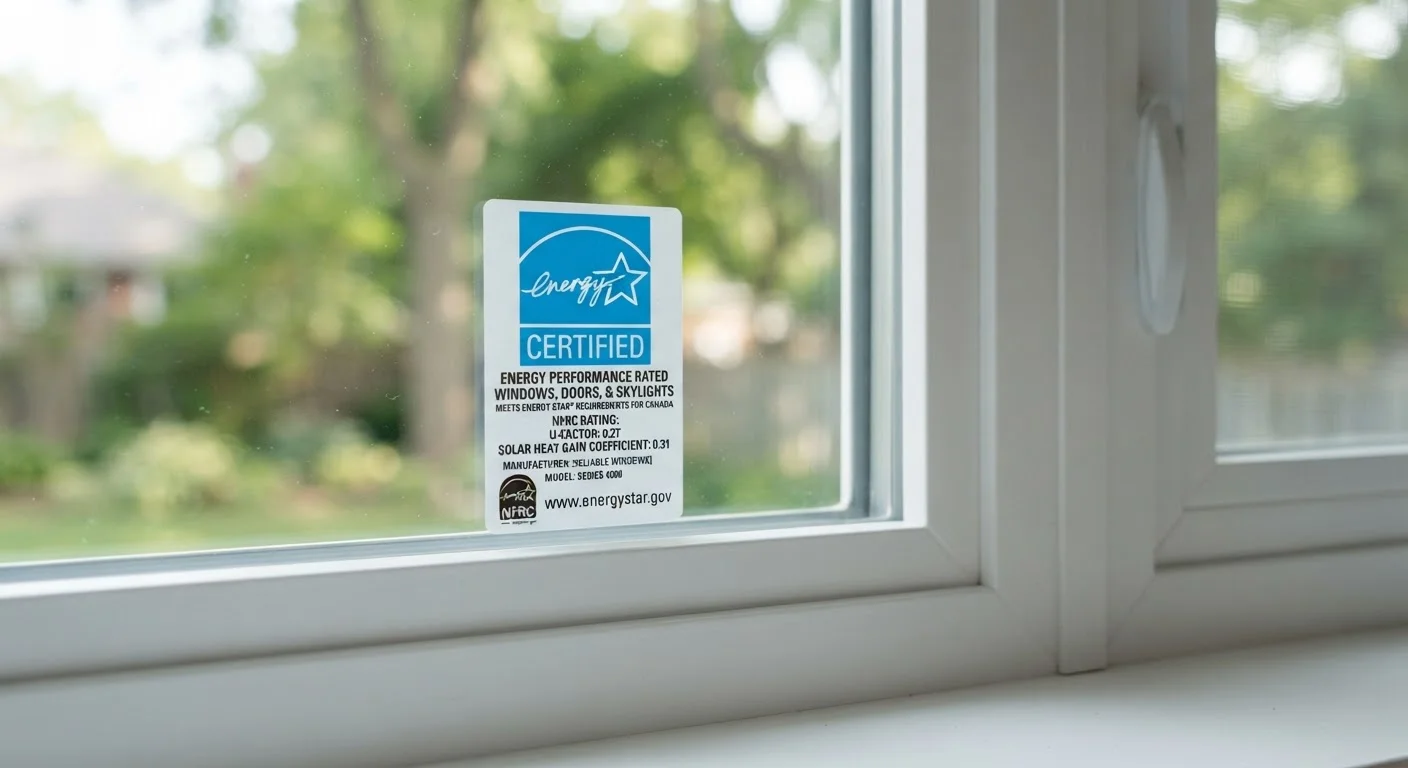
When you see the ENERGY STAR badge on a window, it means the product has been independently tested and confirmed to meet EPA-set thresholds for two specific performance metrics: U-factor and Solar Heat Gain Coefficient (SHGC).
U-factor measures how readily a window conducts heat — lower numbers indicate better insulation. SHGC measures how much solar heat passes through the glass — lower numbers block more solar heat, which is desirable in warmer climates. For a deeper breakdown of these metrics, see our guide on window energy ratings explained.
The certification process relies on testing conducted by the National Fenestration Rating Council (NFRC), a nonprofit organization that sets standardized testing procedures. The ENERGY STAR program then applies its own pass/fail thresholds to that NFRC data. This means every ENERGY STAR window also carries an NFRC label — a critical detail we'll return to shortly.
ENERGY STAR Versions Change Over Time
The EPA periodically updates ENERGY STAR requirements, tightening thresholds as window technology improves. A window certified under an older version of the program may carry the label but not meet current standards. When evaluating products, it can be worth asking a contractor or retailer which version of the ENERGY STAR specification the window was certified under.
How Climate Zones Shape the Requirements
One of the most important — and frequently misunderstood — aspects of ENERGY STAR certification is that requirements are not uniform nationwide. The EPA divides the contiguous U.S. into four climate zones:
- Northern — prioritizes low U-factor to retain indoor heat during cold winters
- North-Central — balances heating and cooling demands
- South-Central — emphasizes low SHGC to reduce solar heat gain
- Southern — focuses heavily on blocking solar heat with very low SHGC requirements
A window certified for the Southern zone may carry a higher U-factor than Northern zone requirements demand — meaning it would not qualify as ENERGY STAR in a colder region. Always confirm which climate zone a product is certified for before purchasing. Our article on climate zone windows walks through how to match ratings to your specific region.
What the Label Leaves Out
ENERGY STAR certification answers a narrow question: does this window meet minimum U-factor and SHGC targets for a given zone? Several performance factors that matter to homeowners fall entirely outside the label's scope:
- Air leakage: Real-world air infiltration around the frame and sash is not evaluated by ENERGY STAR thresholds, though NFRC does test and report this separately.
- Frame durability: The label says nothing about how a vinyl, fiberglass, wood, or aluminum frame will hold up over decades of use and weather exposure.
- Installation quality: Even the highest-rated window will underperform if not properly sealed and flashed during installation. Gaps, improper caulking, or missing insulation around the frame can negate much of the efficiency gain.
- Long-term seal integrity: Double- and triple-pane windows rely on gas fills (typically argon or krypton) between panes. ENERGY STAR does not certify how long that gas fill will remain effective.
Understanding what is and isn't being measured helps you use the label as a starting point rather than a final verdict. For a fuller look at how to separate certified data from marketing claims, see our article on evaluating window energy claims.
How to Use ENERGY STAR Alongside the NFRC Label
The most practical approach is to treat ENERGY STAR as a first filter — it quickly eliminates windows that fall below minimum efficiency standards — and then use the NFRC label to compare options within the certified pool.
The NFRC label reports U-factor, SHGC, Visible Transmittance (VT), air leakage, and condensation resistance in standardized, comparable numbers. Two ENERGY STAR windows side by side may have meaningfully different U-factors or SHGC values; the NFRC data reveals that difference at a glance. Our NFRC label reference guide explains what target ranges to look for in different rooms.
When speaking with contractors, ask them to show you the NFRC label for any window they propose — not just confirmation that it carries the ENERGY STAR badge. A contractor who can explain both the certification zone and the specific metric values is demonstrating the kind of product knowledge that supports good installation decisions. For broader context on everything from label reading to frame selection, the window energy efficiency overview is a useful companion resource.
This article is for informational purposes only. Energy savings depend on many variables including installation, climate, and home construction. Always verify local code requirements and consult a qualified contractor before making window replacement decisions.