

| U-Factor range | 0.20 – 1.20 (lower = better insulation) (NFRC standard rating scale) |
| SHGC range | 0 – 1 (lower = less solar heat admitted) (NFRC standard rating scale) |
| Visible Transmittance (VT) range | 0 – 1 (higher = more daylight) (NFRC standard rating scale) |
| Air Leakage (AL) threshold | ≤ 0.30 cfm/ft² recommended (NFRC optional rating; widely used benchmark) |
| Condensation Resistance (CR) range | 1 – 100 (higher = better moisture resistance) (NFRC optional rating scale) |
| Who certifies NFRC labels | Independent, accredited laboratories (National Fenestration Rating Council) |
What the NFRC Label Is and Why It Matters
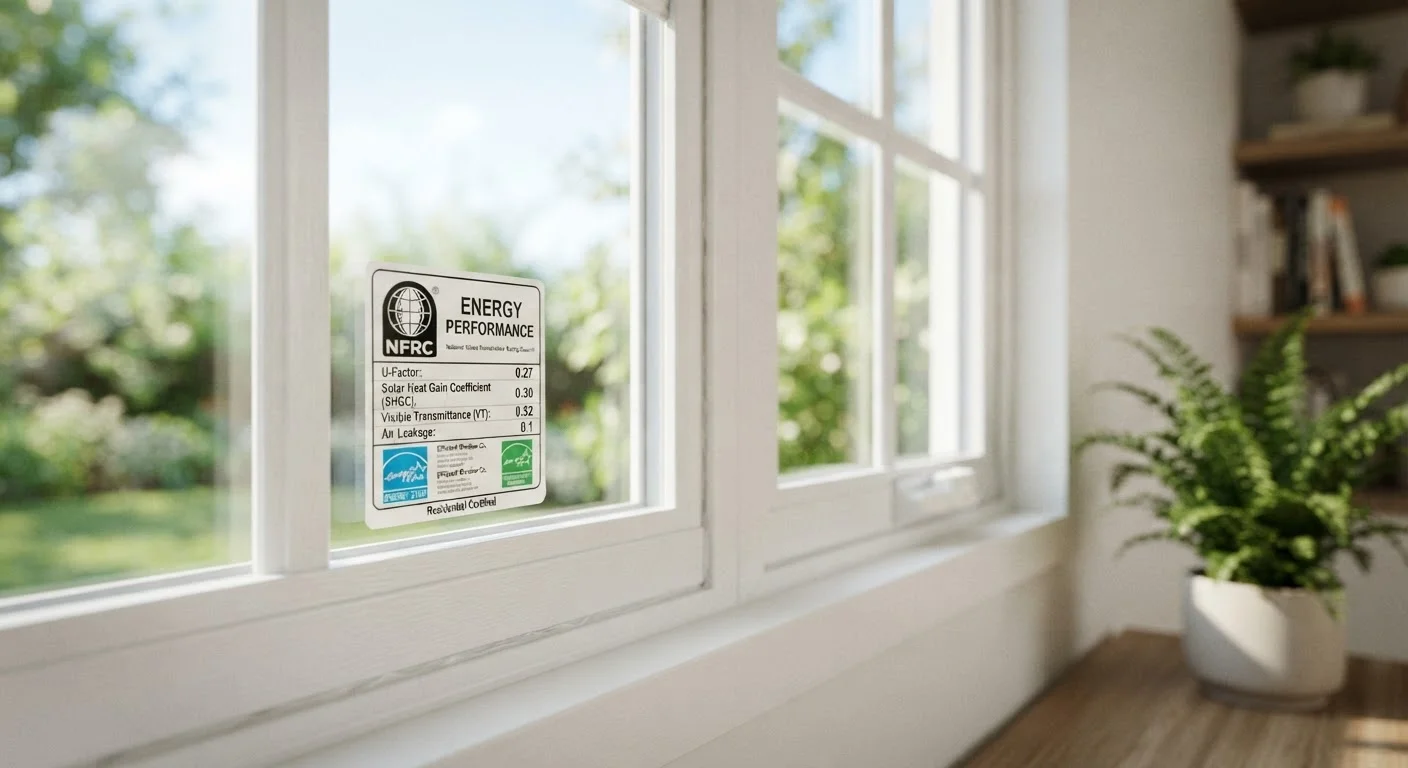
The NFRC label is an independently verified performance card attached to every certified window sold in the United States. Unlike manufacturer brochures, which can use loosely defined marketing terms, the NFRC label reports standardized, lab-tested numbers that allow true apples-to-apples comparisons between products.
There are five ratings on every label: U-Factor, Solar Heat Gain Coefficient (SHGC), Visible Transmittance (VT), Air Leakage (AL), and Condensation Resistance (CR). Each measures a distinct aspect of window performance, and together they tell you how a window will behave in your home throughout all four seasons.
For a deeper explanation of what these numbers mean mechanically, see Window Energy Ratings Explained. This guide focuses on practical target ranges organized by room so you can use the label as a quick decision-making reference.
| U-Factor range | 0.20 – 1.20 (lower = better insulation) (NFRC standard rating scale) |
| SHGC range | 0 – 1 (lower = less solar heat admitted) (NFRC standard rating scale) |
| Visible Transmittance (VT) range | 0 – 1 (higher = more daylight) (NFRC standard rating scale) |
| Air Leakage (AL) threshold | ≤ 0.30 cfm/ft² recommended (NFRC optional rating; widely used benchmark) |
| Condensation Resistance (CR) range | 1 – 100 (higher = better moisture resistance) (NFRC optional rating scale) |
| Who certifies NFRC labels | Independent, accredited laboratories (National Fenestration Rating Council) |
Room-by-Room NFRC Target Ranges
Performance priorities shift depending on where a window sits in your home. The same number that's ideal for a sun-drenched south-facing living room may be the wrong choice for a shaded north-facing bedroom. Use the guidance below as a starting framework — always cross-reference with your climate zone before finalizing any purchase. Climate Zone Windows walks through regional targets in detail.
Living Rooms and Great Rooms
These spaces typically have the largest windows and the most sun exposure. Prioritize a low U-Factor (≤ 0.30) for year-round insulation. For south- or west-facing exposures in warm climates, a low SHGC (≤ 0.25) reduces summer cooling loads. In cold climates, a moderate SHGC (0.40–0.55) on south-facing glass can contribute passive solar warming in winter.
Bedrooms
Comfort and light quality matter most here. Target a VT of 0.50 or higher for adequate daylight. SHGC priorities depend on orientation: keep it low on west-facing walls to prevent late-afternoon overheating that disrupts sleep.
Kitchens and Bathrooms
Moisture and temperature swings are the primary concerns. Look for a Condensation Resistance (CR) rating of 50 or above — higher numbers indicate better resistance to interior moisture buildup on the glass surface. A good AL rating (≤ 0.30 cfm/ft²) is equally important to prevent drafts near sinks and cooking areas.
Basements and Below-Grade Windows
These windows receive little direct sun and are exposed to ground-level cold. Prioritize the lowest U-Factor you can afford — triple-pane options with U-Factors around 0.20 are worth considering in colder climates. SHGC is a lower priority here.
Sunrooms and Enclosed Porches
Glass area is maximized in these spaces, making solar management critical. A low SHGC (0.20–0.27) prevents the space from becoming unusable in summer. Balance this with a reasonable VT (≥ 0.45) so the room still feels bright and airy rather than cave-like.
Using the Label Honestly: Limitations to Keep in Mind
NFRC ratings are tested under standardized laboratory conditions that may not precisely reflect your home's real-world environment — factors like installation quality, interior shading, and local weather patterns all influence actual performance. The label gives you a reliable basis for comparison; it cannot guarantee specific energy savings.
Also note that NFRC certification and ENERGY STAR certification are related but separate. A window can carry an NFRC label without meeting ENERGY STAR thresholds for your climate zone. ENERGY STAR Windows: What the Label Covers and What It Leaves Out explains exactly what that distinction means for homeowners.
Finally, be cautious about efficiency claims made in sales conversations that aren't backed by the NFRC label itself. Evaluating Window Energy Claims helps you separate verified data from unverified marketing language. For a comprehensive view of the entire window-replacement decision — from labels to frame types to contractor selection — Window Energy Efficiency: A Full Overview is a useful next step.
This article is for informational purposes only. Energy performance varies based on installation, climate, home construction, and other factors. Consult a licensed window contractor or energy auditor before making purchasing decisions.