

Key Takeaways
Our Verdict
Neither option is universally superior — the right choice depends on who uses the bathroom, how, and for how long. Curbless showers offer meaningful safety and convenience advantages for older adults or those with mobility challenges. Tub-shower combos retain more flexibility for households with varying needs or homeowners who plan to sell within a few years.
| Best for | Recommended |
|---|---|
| Older adults prioritizing safety and ease of entry | Curbless Shower |
| Homeowners who enjoy soaking baths or have young children | Tub-Shower Combo |
| Those planning to age in place long-term | Curbless Shower |
| Homeowners focused on broad resale appeal in family-oriented markets | Tub-Shower Combo |
Understanding the Two Options
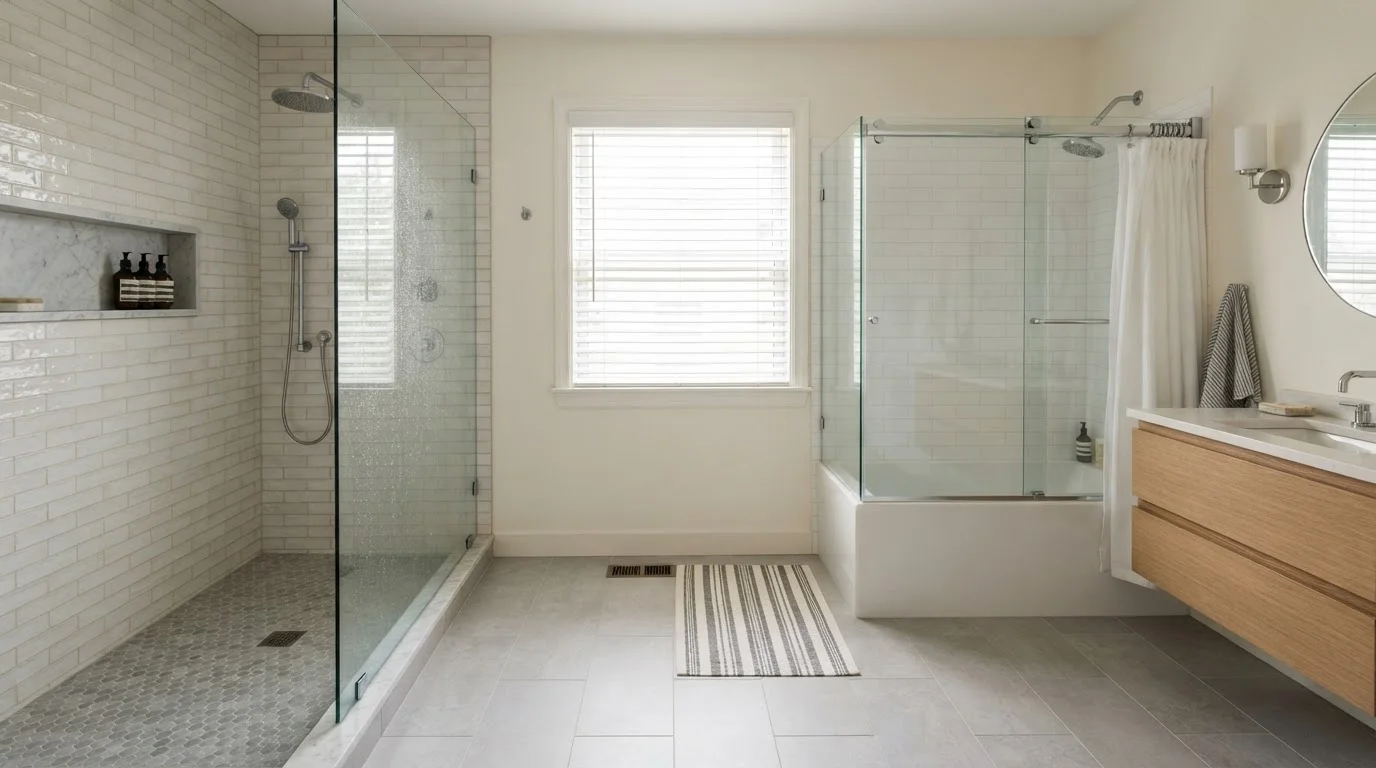
A curbless shower — sometimes called a barrier-free or zero-threshold shower — has no raised lip or step at the entry. The floor transitions directly from the bathroom into the shower area, making it simple to walk or wheel into. To learn about the different entry styles available, see our guide on walk-in shower entry styles.
A tub-shower combo is the familiar setup found in most American homes: a standard bathtub with a showerhead mounted above it. To use the shower, you step over the tub wall — typically 14 to 18 inches high. It serves double duty but requires balance and flexibility every time you enter or exit.
Both configurations can work well in different households. The question is which one fits your specific needs today — and over the next decade.
Accessibility and Daily Safety
For many homeowners aged 50 and older, step-over height is the central concern. Climbing over a tub wall is one of the most common causes of bathroom falls. A curbless shower removes that obstacle entirely, making entry and exit far safer — especially if balance, hip flexibility, or knee strength is a factor.
Curbless designs also accommodate shower seats, grab bars, and handheld showerheads more naturally, since the open floor plan leaves more room for assistive features. If mobility needs may increase over time, a curbless layout is much easier to adapt without a full renovation.
Tub-shower combos, by contrast, become progressively harder to use safely as mobility changes. Bathing in a tub requires lowering yourself to a seated position and rising back up — a movement that many people find difficult or painful as they age.
| Curbless Shower | Tub-Shower Combo | |
|---|---|---|
| Entry ease | No step — walk straight in | Step over 14–18" tub wall required |
| Fall risk at entry | Low — no threshold to clear | Higher — step-over is a common hazard |
| Bathing option | Shower only | Both shower and soaking bath |
| Aging-in-place suitability | High — easy to add grab bars, seat | Lower — tub becomes harder to use over time |
| Installation complexity | Higher — floor slope and waterproofing required | Lower — standard replacement is simpler |
| Typical upfront cost | Generally higher | Generally lower for like-for-like replacement |
| Resale considerations | May concern some buyers if only bathroom | Broadly familiar and expected by most buyers |
| Space flexibility | Can feel more open and spacious | Fixed footprint of standard tub |
For a direct side-by-side comparison of walk-in showers against walk-in tubs, our article on which option suits your mobility needs covers that decision in depth.
Installation Complexity and Cost Considerations
Curbless showers are not simply a matter of removing a curb. Proper installation requires careful floor slope (typically a quarter-inch drop per foot toward the drain) so water flows away from the room rather than pooling on the bathroom floor. Waterproofing the surrounding walls and subfloor to a higher standard than a conventional shower is also essential.
These requirements mean a curbless conversion generally costs more than a standard tub-to-shower swap. Costs vary considerably by region, bathroom size, existing plumbing layout, and materials chosen — getting quotes from at least two or three licensed contractors is advisable before committing. For a deeper look at what changes structurally, see what changes beyond the step.
Replacing a tub-shower combo with a new tub-shower combo is comparatively straightforward and tends to be less disruptive, though costs still vary widely depending on fixture quality and tile work.
Note: Bathroom renovation work often requires permits and inspections. Requirements vary by municipality — always verify local codes with your contractor or building department before work begins.
Resale Value and Market Realities
One concern homeowners often raise is whether removing a bathtub harms resale value. Real estate guidance generally suggests that homes with no bathtub in any full bathroom can be harder to sell in markets where families with young children are the dominant buyer pool. If your home has only one full bathroom and you convert the tub to a curbless shower, some buyers may be deterred.
That said, the impact varies significantly by neighborhood, price point, and local buyer demographics. In communities with a higher proportion of older buyers or downsizers, an accessible bathroom may actually be a selling point. If your home has multiple bathrooms and a tub remains elsewhere, the concern is considerably reduced.
Discuss your specific market with a real estate professional if resale timing is a priority. If you plan to stay in your home long-term, personal usability and safety generally outweigh speculative resale considerations.
Making the Decision That's Right for Your Household
Start by asking a few practical questions: Do you currently use the bathtub, and do you expect to in the future? If you shower daily but rarely or never bathe, a curbless shower is a strong fit. If soaking baths are part of your routine or important to another household member, eliminating the tub requires more thought.
Consider also who else uses the bathroom now and who might in the future. Grandchildren visiting regularly, a spouse with different mobility needs, or a future caregiver may all influence the choice.
Finally, think about how long you intend to stay in your home. Aging-in-place renovations — including curbless showers — are most valuable when you have years to benefit from them. Our accessible bathrooms planning guide covers broader considerations for adapting your bathroom for long-term safety and independence.
Whatever direction you lean, work with a licensed contractor experienced in accessible bathroom design. Ask to see examples of their curbless installations, request references, and confirm they understand local permit requirements before any work begins.