

Key Takeaways
Why Heavy Tree Cover Creates a Harder Problem
A yard shaded by a dozen mature trees is a beautiful thing — until fall arrives and your gutters disappear under a shifting blanket of debris. What many homeowners don't realize is that different tree species shed debris in different shapes, sizes, and volumes, and gutter guards are not one-size-fits-all solutions.
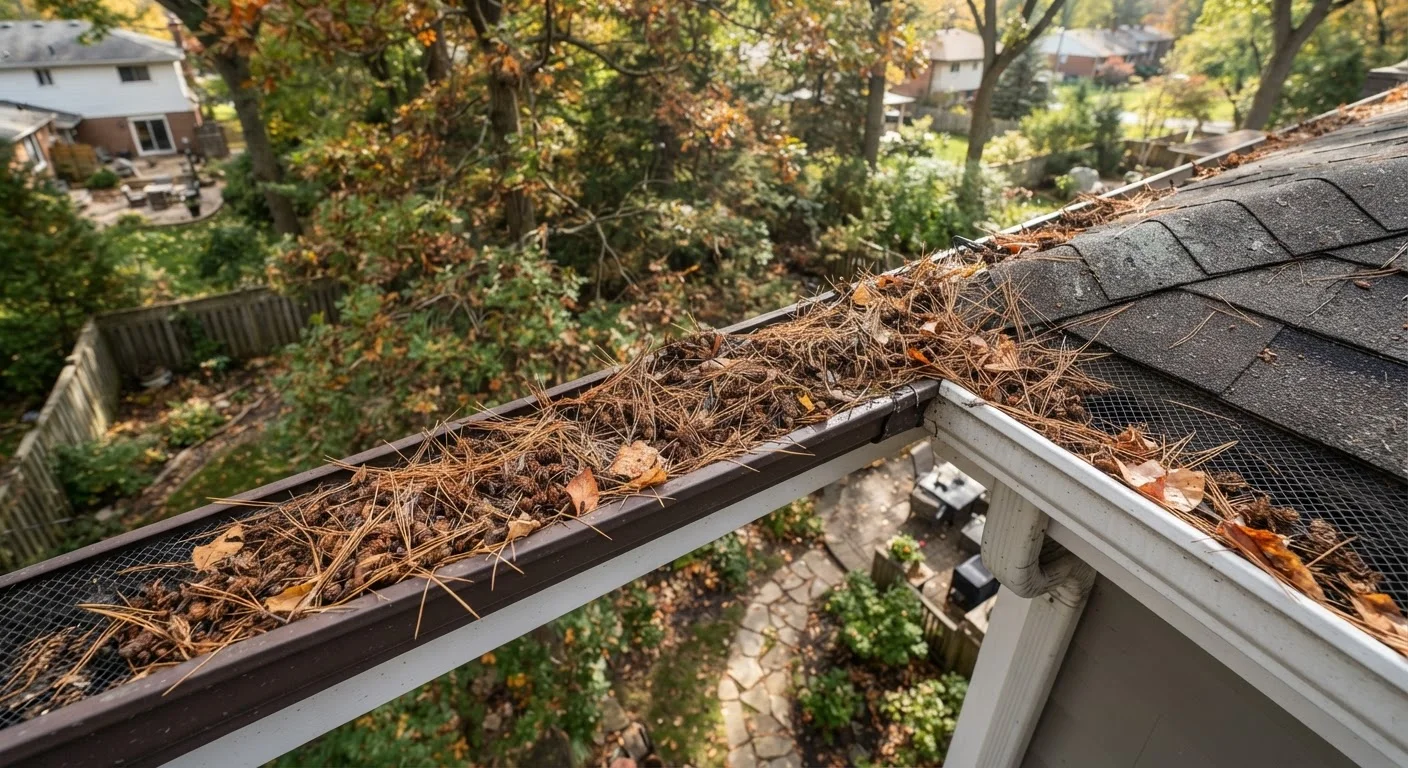
Large oak or maple leaves are bulky enough that most guard styles — even basic covers — will let them blow off in wind or be brushed away easily. The harder problems are the fine, slender, or sticky debris types: pine needles that thread through wide openings, sweet gum balls that lodge in mesh holes, helicopter seeds that mat together, and shingle grit that coats filter surfaces over time.
Before selecting a guard style, it helps to identify which trees are actually overhanging your roofline. For a thorough foundation, see our complete beginner's guide to gutter guards — it walks through guard categories and what conditions each is designed to handle.
Best Practices for Choosing a Guard in High-Debris Yards
Applying the right selection criteria upfront saves time, money, and frustration. These practices reflect what experienced installers consistently recommend for homes surrounded by trees.
Identify the specific tree species overhanging your roofline before evaluating any guard style.
Pine needles, sweet gum balls, maple helicopters, and oak leaves each present different challenges. A guard that handles large flat leaves poorly may excel against pine needle infiltration — and vice versa. Knowing your debris type narrows your choices significantly.
Prioritize micro-mesh guards when your yard includes conifers or trees with fine, narrow debris.
Pine needles are among the most difficult debris types for gutter guards to handle. Their narrow, rigid shape allows them to slide through openings that stop broad leaves. Micro-mesh with very small openings is the only style reliably shown to prevent pine needle entry.
Choose aluminum or stainless steel mesh over plastic or vinyl in high-debris, shaded environments.
Plastic and vinyl guards can become brittle in freeze-thaw cycles and may warp under prolonged debris weight. Metal options hold their shape and filtration integrity longer under heavy load — an important factor when debris accumulates quickly.
Ask installers specifically how a guard handles the debris types present in your yard — not just general debris.
Marketing descriptions often use vague terms like "handles all debris types." A knowledgeable installer should be able to explain, in plain terms, what a particular guard will and won't block given your specific tree species. Vague answers are a signal to ask more questions.
Plan your inspection schedule around your trees' shedding cycles, not the calendar year.
Most homeowners assume a once-a-year fall clean is sufficient. In heavily treed yards — especially those with evergreens or multiple species that shed at different times — debris accumulates in multiple waves. Inspecting after each major shed event prevents surface buildup from impairing water flow.
Understanding Filtration: Micro-Mesh vs. Other Options
The term "mesh" covers a wide range of filtration densities, and that gap in performance matters enormously under tree-heavy conditions. Standard mesh guards — those with openings roughly 1/8 inch or larger — allow pine needles to slip through end-first and let small seed fragments enter freely. Micro-mesh guards, by contrast, use openings as fine as 50 microns, blocking nearly all solid debris while still allowing water flow.
For a detailed side-by-side comparison of how these two styles handle the debris patterns common to wooded yards, see our guide to micro-mesh vs. standard mesh guards. It's worth reading before making a final decision.
Perforated cover-style guards — flat panels with punched holes — occupy a middle ground. They handle large leaves reasonably well but struggle with the fine debris common under conifers. Comparing perforated covers to mesh guards directly can help clarify which is the better fit for your specific debris mix.
“The single biggest mistake homeowners make is choosing a gutter guard based on what looks good on the box rather than what's actually falling from their trees. The debris in your yard is the specification — everything else follows from that.”
— A licensed exterior contractor with experience in residential gutter systems, Residential roofing and gutter specialist
Setting Realistic Maintenance Expectations
Even the best-performing micro-mesh guard needs periodic attention in a heavily treed yard. Fine debris — particularly shingle grit, pollen, and decomposed leaf matter — can accumulate on the surface of any guard and gradually reduce water intake. Understanding hidden cloggers like algae and shingle grit helps homeowners recognize early warning signs before a blockage develops.
Your maintenance schedule will also vary depending on which tree species surround your home. Pine trees shed year-round rather than seasonally, meaning quarterly inspections may be more appropriate than a once-a-year clean. How your tree coverage shapes your maintenance schedule offers practical guidance tailored to common landscape types.
Finally, once you've identified the right guard style, review what installation typically costs so you can plan your budget with accurate expectations.
This article provides general educational guidance only. Gutter guard performance varies by product, installation quality, and local conditions. Consult a qualified contractor to assess your specific home and landscape before purchasing or installing any gutter protection system.