

Key Takeaways
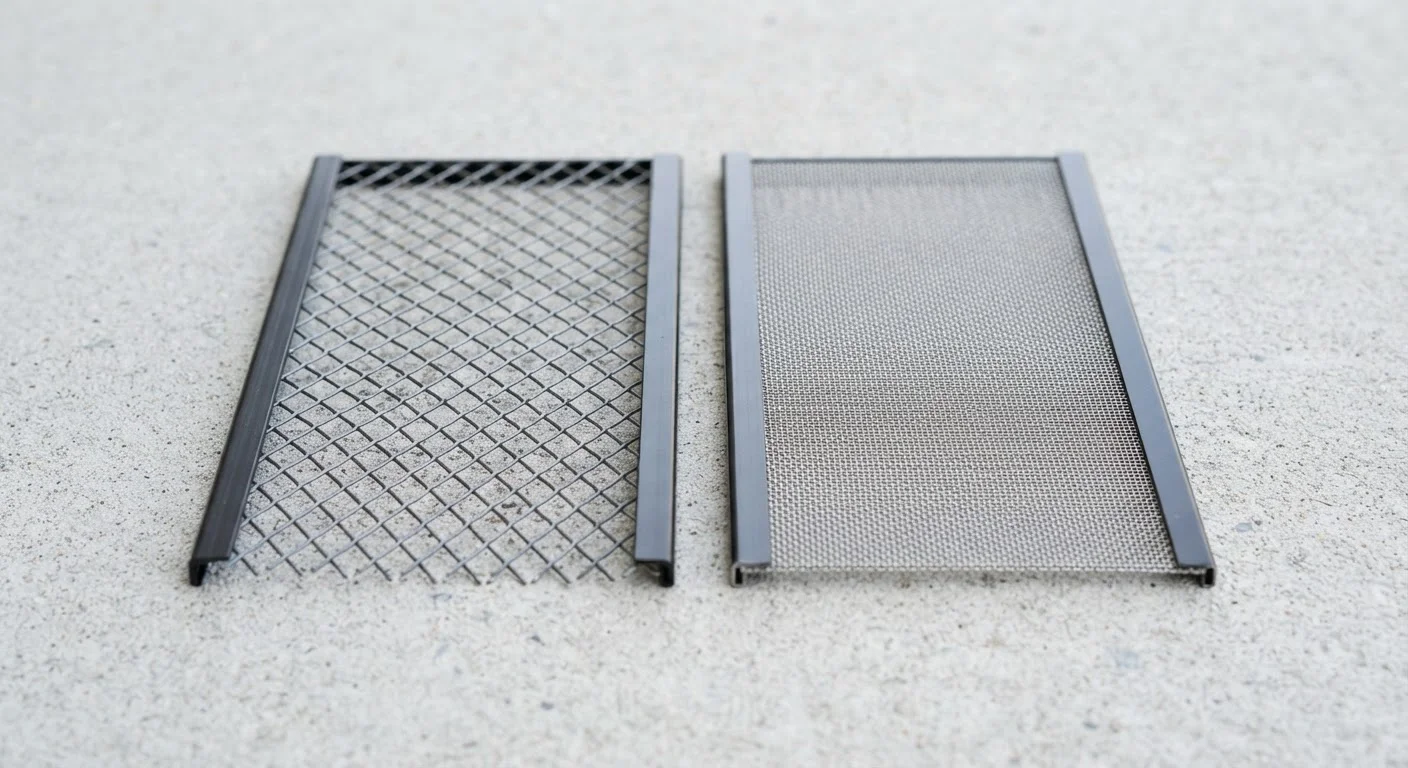
Option A
Micro-Mesh Gutter Guards
The fine-filtration, high-precision option.
Best for: Homes surrounded by pine trees, fine debris, or any property where shingle grit clogging is a real concern.
Option B
Standard Mesh Gutter Guards
The straightforward, widely available screen solution.
Best for: Homes with moderate tree cover producing larger leaves and debris, where basic screening is the priority.
If your yard has pine trees or produces fine debris like seed pods and shingle grit
Micro-Mesh Gutter Guards
Micro-mesh openings are small enough to stop the fine particles that slip right through standard mesh, reducing interior gutter buildup significantly.
If your property has moderate tree cover dropping larger leaves and minimal fine debris
Standard Mesh Gutter Guards
Standard mesh handles large-leaf debris effectively at a lower upfront cost, making it a practical choice when fine filtration isn't needed.
If minimising long-term maintenance time is your top priority
Micro-Mesh Gutter Guards
Finer filtration keeps more debris out of the gutter channel itself, meaning less hands-on cleaning inside the gutter over time.
If upfront installation cost is a primary concern
Standard Mesh Gutter Guards
Standard mesh products typically carry a lower material and labor cost, offering a budget-friendlier entry point for basic gutter protection.
What Actually Separates Micro-Mesh from Standard Mesh
Both micro-mesh and standard mesh gutter guards sit over the top of your gutters and allow rainwater to pass through while blocking debris. The critical difference is the size of the openings in the mesh — and that single variable changes almost everything about how each guard performs.
Standard mesh guards typically feature openings measured in millimeters — large enough to stop twigs and whole leaves, but not fine enough to catch pine needles, seed pods, or the granules that wash off asphalt shingles over time. Micro-mesh guards, by contrast, use openings commonly measured in microns (one micron equals one-thousandth of a millimeter). This much finer weave can intercept debris that standard mesh simply passes into the gutter channel below.
For a broader overview of how mesh compares to other guard styles such as foam inserts and reverse-curve covers, see our guide to gutter guard styles.
| Criterion | Micro-Mesh | Standard Mesh |
|---|---|---|
| Opening size | 50–300 microns (very fine) | 1–4 mm (larger openings) |
| Blocks pine needles | Yes, in most cases | No — needles slip through |
| Blocks shingle grit | Yes | No |
| Handles large leaves | Yes | Yes |
| Typical material | Stainless steel weave, aluminum frame | Aluminum or vinyl screen |
| Relative upfront cost | Higher | Lower |
| DIY-friendly installation | Often professional install recommended | Many clip-on options available |
| Maintenance frequency | Lower (less gutter interior buildup) | Moderate to higher in fine-debris yards |
How Each Guard Handles Common Debris Types
The type of trees and vegetation surrounding your home should heavily influence your guard selection. Large, flat leaves — oak, maple, sycamore — tend to sit on top of either guard type and blow away or can be swept off during routine maintenance. Both mesh styles handle this scenario adequately.
Where the two types diverge is with fine debris. Pine needles are narrow enough to stand upright and slide through standard mesh openings, landing directly in the gutter. Shingle grit — the tiny mineral granules on asphalt roofing — washes down in rain and accumulates inside standard-mesh-protected gutters over time. Micro-mesh guards block both, keeping the gutter channel cleaner between inspections.
Heavy rainfall introduces another variable. During intense downpours, water volume can temporarily exceed what any mesh can pass through, causing water to sheet over the guard's edge. This behavior, sometimes called overshoot, occurs with both types — though a clogged or debris-laden surface worsens it. Homes in high-debris environments may benefit from guidance specific to heavy tree cover.
Installation, Cost, and Maintenance Considerations
Micro-mesh guards generally require more precise manufacturing — stainless steel or aluminum frames holding a fine stainless weave — which translates to higher material costs. Standard mesh guards, often made from aluminum or vinyl screening, typically cost less per linear foot of gutter protected. For a detailed breakdown of how mesh guard type shapes overall pricing, see our cost comparison by guard material.
Installation complexity also differs. Some standard mesh guards are designed for DIY clip-on installation, while micro-mesh products — especially professional-grade versions — are more commonly installed by contractors who secure them under the first row of shingles for a tighter fit. Disturbing shingles during installation may affect your roofing warranty, so confirm this with your roofer before work begins.
On the maintenance side, micro-mesh surfaces can attract a thin layer of debris that mats down over time, particularly in shaded or damp environments. Periodic rinsing with a garden hose is typically all that's required, though a soft brush may help in stubborn cases. For care routines across both mesh types, our maintenance guide covers what to expect.
Making the Right Choice for Your Home
The most practical way to decide between micro-mesh and standard mesh is to look up at your trees and examine what ends up in your gutters today. If you regularly find pine needles, seed-pod casings, or a sandy grit layer inside your gutters, micro-mesh is worth the additional investment. If your gutters mainly collect large leaves and you clean them once or twice a year without trouble, standard mesh may be entirely sufficient.
Also consider the long view: a guard that keeps the gutter channel cleaner reduces the risk of standing water, which can contribute to rust, wood fascia rot, and pest nesting. Neither guard type eliminates all maintenance, but choosing the right filtration level for your specific debris load reduces how often intervention is needed.
If you're also evaluating perforated-cover options alongside mesh guards, our side-by-side comparison of perforated covers and mesh can help round out your decision.
This article is for general informational purposes only. Gutter guard performance varies based on installation quality, local climate, roof type, and debris conditions specific to your property. Consult a qualified contractor before making installation decisions.