

Key Takeaways
Our Verdict
No single gutter guard type wins across every situation. Foam and basic screen guards suit tight budgets and low-debris yards, while micro-mesh is the stronger long-term value for homes surrounded by trees. Reverse curve guards occupy a middle ground that works well in specific climates but can underperform where fine debris or heavy rain is common.
| Best for | Recommended |
|---|---|
| Homeowners on a tight upfront budget | Foam or basic screen inserts |
| Homes with heavy tree coverage and fine debris like pine needles | Micro-mesh guards |
| Moderate debris environments seeking a balance of cost and durability | Reverse curve guards |
| Those prioritizing lowest lifetime maintenance burden | Stainless steel micro-mesh guards |
Why Your Guard Type Is the Biggest Cost Variable
When homeowners start comparing gutter guard quotes, they often focus on total project price. But the more useful question is: what is driving that number? In most cases, the answer is material type. The guard style you choose shapes not only the per-linear-foot material cost but also how long installation takes, what kind of labor is involved, and how much ongoing maintenance you'll need to budget for.
Before comparing prices, it helps to understand the four main guard families. If you need a refresher, the gutter guard styles explained guide walks through each type in plain language. For a fuller cost overview that goes beyond material type, see the plain-language installation cost breakdown.
Breaking Down Costs by Guard Type
The figures below reflect typical contractor-installed ranges reported across the U.S. market. Costs vary by region, home size, gutter condition, and roof pitch, so treat these as planning benchmarks rather than firm quotes.
| Foam Insert | Basic Screen / Perforated | Reverse Curve | Micro-Mesh | |
|---|---|---|---|---|
| Typical installed cost (per linear foot) | $0.50–$2.00 | $1.00–$3.50 | $3.00–$8.00 | $4.00–$12.00 |
| Material durability | Low (3–5 years) | Moderate (5–10 years) | Moderate–High (10–20 years) | High (15–25+ years) |
| Debris filtration quality | Low | Low–Moderate | Moderate | High |
| Installation complexity | Very low | Low | Moderate–High | Moderate |
| Ongoing maintenance demand | High | Moderate–High | Moderate | Low–Moderate |
| Best climate fit | Any (short-term) | Low-debris areas | Dry, light-debris areas | Most climates |
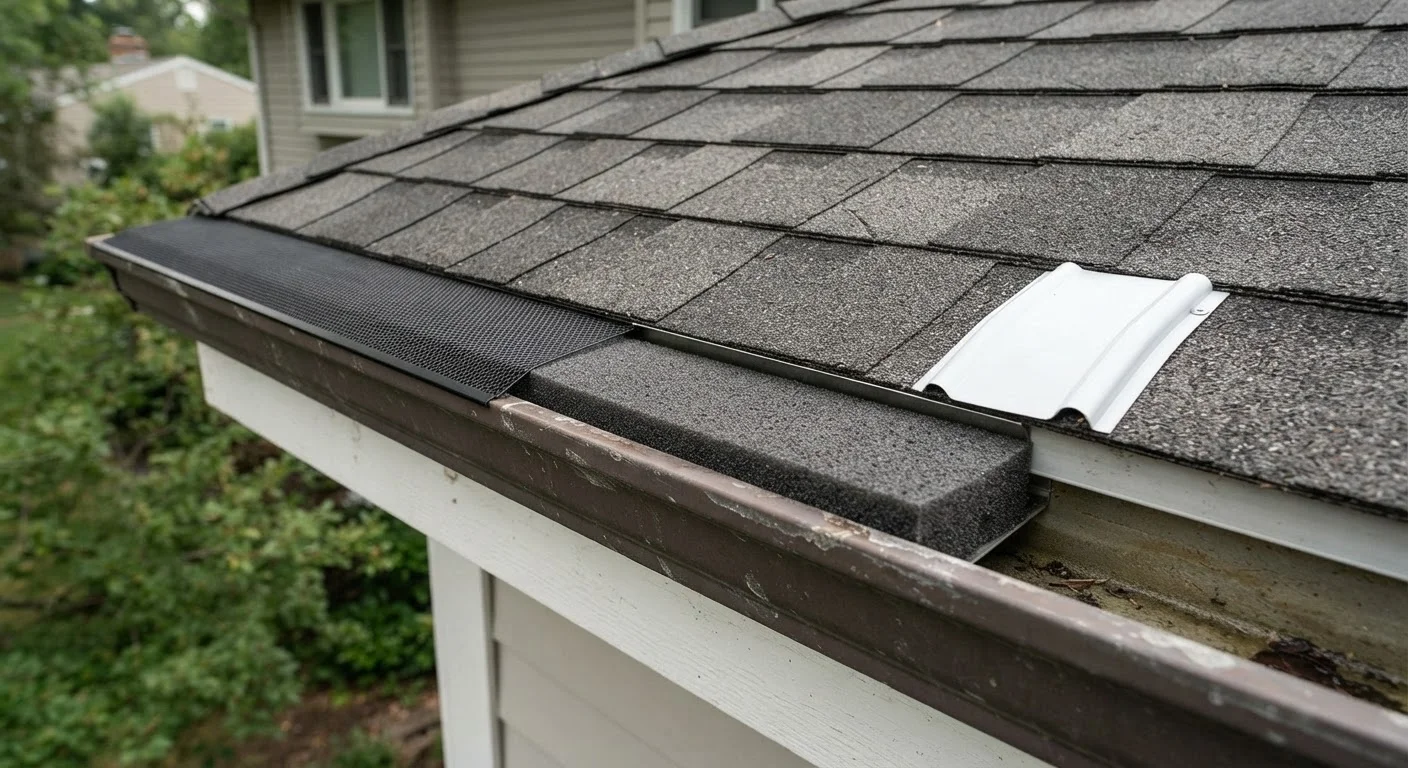
Foam inserts are the entry point. They slide directly into the gutter channel, requiring no fasteners or special tools, which keeps labor costs minimal. The trade-off: foam degrades over time, retains moisture, and can become a growing medium for moss and seeds. Many homeowners replace them every three to five years.
Basic screen and perforated cover guards are a step up in durability. Aluminum or plastic panels sit over the gutter opening and block larger debris. They're inexpensive and widely available, but larger holes let in smaller debris like shingle grit and tree seeds. See how they compare in detail: perforated cover vs. mesh gutter guard.
Reverse curve guards (also called surface tension guards) use a curved nose to direct rainwater into the gutter while debris theoretically falls away. They require more precise installation — particularly at the roof pitch angle — which raises labor time and cost. They perform well in light-debris climates but can struggle with heavy seed pods or fine particulate. How reverse curve guards actually work explains the physics in detail.
Micro-mesh guards carry the highest upfront cost but filter debris down to very fine particles. Stainless steel micro-mesh, in particular, resists corrosion and can last 20 years or more with minimal cleaning. For homes with heavy tree coverage, the long-term math often favors micro-mesh. Comparing the two mesh tiers in depth: micro-mesh vs. standard mesh.
The Hidden Cost Factor: Maintenance Over Time
Purchase price tells only part of the story. A guard type that costs half as much at installation but needs cleaning every six months can easily exceed the lifetime cost of a pricier, lower-maintenance option.
Foam inserts, for example, often require annual removal and rinsing — and eventual full replacement. Reverse curve guards can accumulate debris along the nose lip, requiring periodic clearing. Micro-mesh guards shed debris more cleanly but still benefit from an annual inspection, particularly in high-pollen regions.
For a full breakdown of what each material demands after installation, see gutter guard maintenance across material types.
Think in Total Cost, Not Just Sticker Price
When evaluating guard types, calculate an estimated 10-year cost by adding installation price to expected maintenance and replacement expenses. A foam insert at $1 per foot that needs full replacement every four years will cost more over a decade than a $6-per-foot micro-mesh guard that only needs an annual inspection. Ask any contractor you speak with to walk you through the expected maintenance schedule for the type they recommend.
It's also worth questioning common assumptions about value. The gutter guard cost myths guide addresses beliefs like "all guard types cost about the same" that can leave homeowners underprepared when quotes arrive.
What to Ask Before Choosing a Guard Type
The right guard type for your home depends on factors that go beyond price per foot. Consider asking a contractor — or yourself — these questions before deciding:
- What trees surround the home? Pine needles, maple seeds, and oak leaves each interact differently with guard designs. Fine debris needs fine filtration.
- What is your roof pitch? Steeper pitches can affect how reverse curve guards perform and may add to labor costs for any guard type.
- How old are your gutters? Installing guards over damaged or improperly sloped gutters reduces effectiveness regardless of material. Factor in any gutter repair costs.
- What is your local rainfall intensity? Heavy downpours can overwhelm certain guard designs — particularly reverse curve styles — causing water to sheet over the front edge rather than entering the gutter.
For context on how your roofing material interacts with gutter performance, the roof materials overview provides useful background. A broader side-by-side view of all four guard families — including debris handling and climate suitability — is available in the four guard families comparison.
This article is for informational purposes only. Cost ranges are general estimates and will vary by region, home, and contractor. Always obtain multiple quotes and verify local contractor licensing requirements before proceeding with any installation.