

Key Takeaways
Gutter Guard
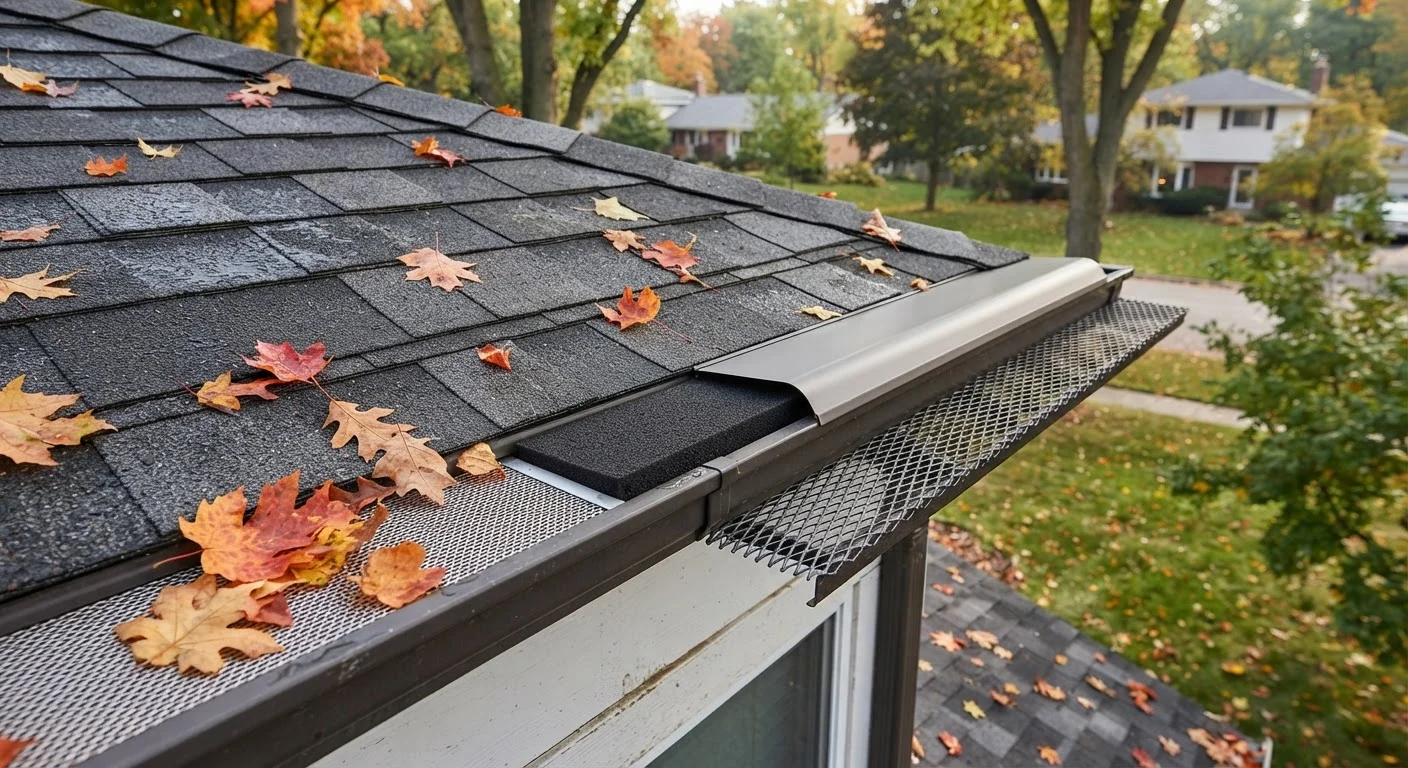
A gutter guard is a cover or insert that sits over or inside your existing gutters to prevent leaves, twigs, and other debris from collecting inside and causing clogs. They come in several distinct styles, each designed around a different physical method for letting water in while keeping debris out. No single type works best in every situation — the right choice depends on your roof, the trees nearby, and your local climate.
Guard performance is often rated by mesh micron size (for mesh guards) or water-handling capacity in inches per hour — metrics worth asking about when comparing options with a contractor.
The Five Main Gutter Guard Families
Walk into any hardware store or call a gutter contractor, and you'll encounter several distinct guard styles. Each one approaches the same basic problem — keeping debris out while letting water flow freely — through a different mechanism. Here's what you're looking at with each family.
Mesh guards use a sheet of perforated metal or plastic stretched across the gutter opening. Water passes through small holes while leaves and larger debris rest on top and eventually blow or wash away. Hole size matters: finer mesh catches smaller debris like pine needles and shingle grit, though very fine mesh can also be more prone to surface clogging over time.
Reverse curve guards (sometimes called surface tension guards) rely on water's natural tendency to cling to a curved surface. Water follows the curve into the gutter opening while leaves fall away. The physics works well under specific conditions — how reverse curve guards actually work depends on roof pitch, rainfall rate, and correct installation angle.
Foam inserts sit directly inside the gutter channel. Water soaks through the porous foam while debris rests on top. They're simple to install but require more frequent inspection since organic matter can accumulate within the foam itself.
Brush guards work similarly to foam — a cylindrical brush sits in the gutter with bristles facing up, trapping debris on the surface. They're easy to remove for cleaning but can collect pine needles and small debris within the bristles.
Screen guards are flat perforated sheets — typically aluminum or plastic — that lay over the gutter. They're among the most affordable options but generally have larger openings that let through smaller debris. See our quick reference guide for a side-by-side snapshot of all five families.
Matching Guard Style to Your Home's Conditions
The most important factor isn't which style is generally popular — it's which style suits your specific property. A few key questions help narrow the field.
No Guard Eliminates Maintenance Entirely
A common misconception is that gutter guards make gutters completely self-cleaning. In practice, all guard styles reduce how often gutters need attention — they don't eliminate that need. Fine debris like shingle grit, seed pods, and pollen can accumulate on or within guards over time. Factor ongoing maintenance into your decision when comparing styles.
What trees surround your home? Large deciduous trees (oaks, maples) shed big leaves that most guard types handle reasonably well. Pine trees are trickier — their needles are narrow enough to slip through coarser openings and can work their way into foam and brush inserts. Homes with heavy pine coverage typically benefit from fine-mesh guards with smaller openings.
How steep is your roof? Roof pitch affects how fast water accelerates before hitting the gutter. A steep roof sends water at higher velocity, which can cause it to overshoot some guard designs — particularly reverse curve styles — entirely. A roofing or gutter contractor can measure pitch and advise accordingly.
What's your typical rainfall like? In areas with brief, intense storms, high water-flow capacity matters. Fine-mesh guards need to be rated for the water volume your climate produces, otherwise water simply runs over the top of the guard instead of through it.
For a structured comparison of all four main families across these variables, the side-by-side comparison of all four guard families provides a useful reference.
What to Ask Before Choosing a Style
Once you have a sense of the styles, the conversation with a contractor becomes much more productive. A few questions worth raising:
- What debris types are most common at my property? Your contractor should assess this directly, not guess.
- What water-flow rating does this guard carry? A guard that can't keep up with heavy rain is effectively no guard at all.
- How is this style attached — does installation void my roof warranty? Some mounting methods involve fastening into roofing materials, which can affect manufacturer warranties.
- What does maintenance look like long-term? Every style has a maintenance requirement; the question is how much and how often.
Understanding the styles before this conversation means you're evaluating options rather than simply accepting whatever is proposed. For what to expect once you move forward, our guide to installation and costs explains the process and typical pricing factors. And once guards are in place, our maintenance and cleaning guide walks through keeping them effective year-round.
This article is for informational purposes only. Gutter guard performance varies by product, installation quality, and local conditions. Consult a licensed contractor for advice specific to your home.