

Key Takeaways
Asphalt Shingles
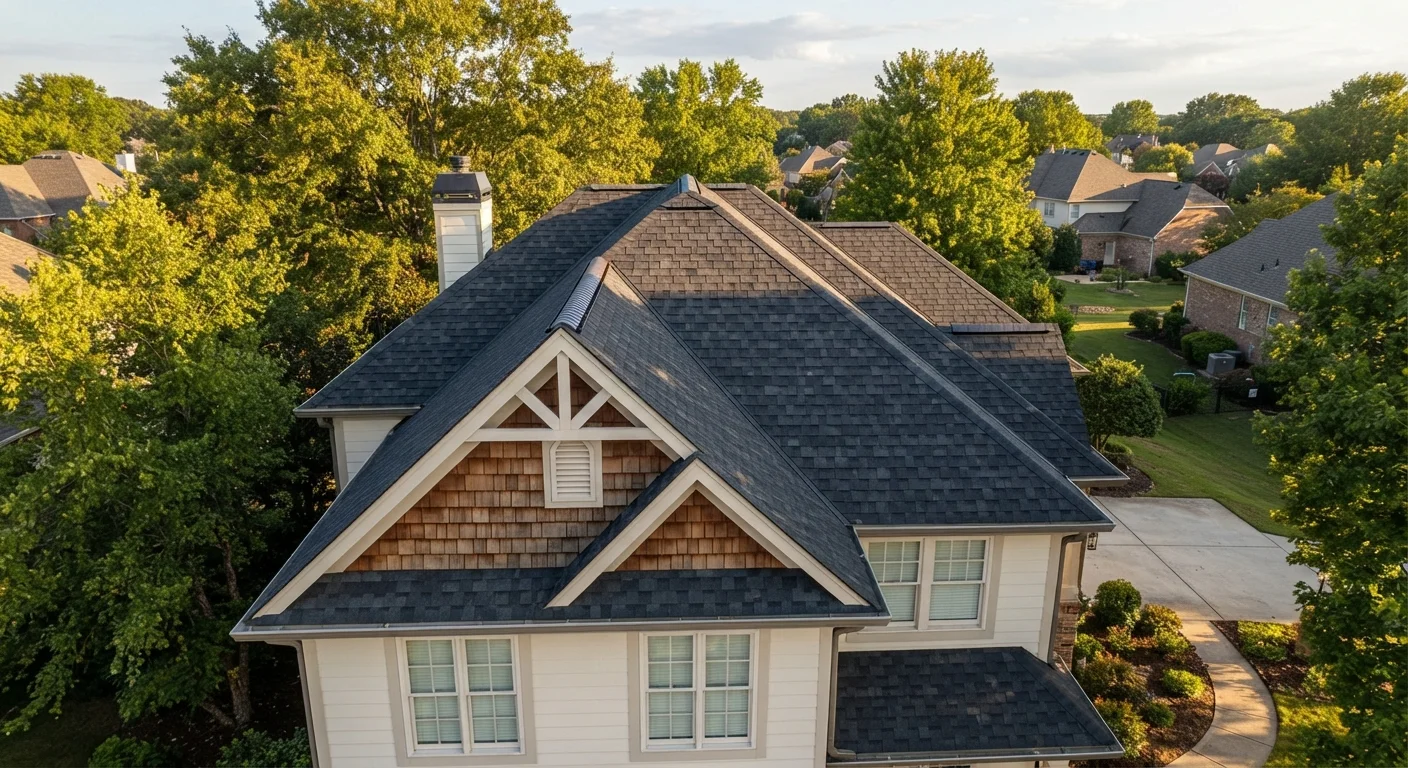
Asphalt shingles are flat, overlapping roofing panels made from a fiberglass or organic mat coated with asphalt and surfaced with granules. They are installed in layered rows across a roof deck to shed water and protect the structure beneath. They come in a range of styles, colors, and grades — from basic three-tab shingles to heavier architectural (also called dimensional or laminate) shingles.
Most modern asphalt shingles use a fiberglass mat rather than an organic felt base, improving fire resistance and dimensional stability while reducing weight.
What Asphalt Shingles Are Made Of
Understanding what goes into an asphalt shingle helps explain both its durability and its limitations. Every shingle is built in layers. At the core is a mat — today almost always made from fiberglass strands bonded together. This mat is then saturated and coated with asphalt, which makes the shingle waterproof. On top of that coating, manufacturers press ceramic-coated mineral granules into the surface.
Those granules do more than add color. They protect the asphalt layer from ultraviolet (UV) radiation, which would otherwise degrade it quickly. They also provide fire resistance and improve impact tolerance. As a shingle ages, you may notice granules accumulating in your gutters — this is a normal sign of wear and one of the earliest indicators that a roof is approaching the end of its service life.
For a broader look at how asphalt shingles compare to other common materials, see Roofing Materials Explained.
The Two Main Types: Three-Tab vs. Architectural
Most homeowners encounter two categories of asphalt shingles when planning a roofing project.
- Three-tab shingles are the traditional, thinner option. They are cut with three evenly spaced notches along the bottom edge, giving each strip the appearance of three separate shingles. They are lighter and typically less expensive, but also thinner and less wind-resistant than architectural shingles.
- Architectural shingles (also called dimensional or laminate shingles) are made from two layers of material bonded together. The result is a heavier shingle with a contoured, textured surface. They tend to carry longer manufacturer warranties — often 30 years or more — and better wind ratings.
Architectural shingles have become the dominant choice for new installations in recent decades, largely because their added thickness and performance have made the price difference relatively modest compared to the longer service life they offer.
~75–80%
U.S. homes with asphalt shingle roofs
Industry estimates consistently place asphalt shingles as the dominant residential roofing material across North America by installed area.
20–30 years
Typical asphalt shingle lifespan
Lifespan varies by shingle grade, climate conditions, and quality of attic ventilation; architectural shingles generally last longer than three-tab options.
Class A
Highest fire-resistance rating available
Most fiberglass-based asphalt shingles qualify for a Class A fire rating — the highest category — under standard testing protocols.
Why Asphalt Shingles Are So Widespread
Several practical factors have made asphalt shingles the default roofing material across most of North America.
Cost accessibility. Asphalt shingles generally cost less per square foot to purchase and install than metal, tile, or slate. This lower upfront cost makes them attainable for a wide range of household budgets. For a full look at how material costs compare, see Roofing Material Options and What Each One Costs to Install.
Contractor familiarity. Because asphalt shingles are so common, virtually every licensed roofer is experienced with installing them. This widespread expertise keeps labor pricing competitive and makes it easier to find qualified contractors locally — something worth keeping in mind when you start hiring a roofer.
Variety of styles. Modern asphalt shingles are available in dozens of colors and profiles, including options that mimic the look of wood shake or slate at a fraction of the material cost.
Adequate performance for most climates. While they are not the longest-lasting option, asphalt shingles perform reliably across the wide temperature swings, rain, snow, and wind conditions found in most U.S. regions when properly installed and ventilated.
Limitations to Understand Before You Decide
Asphalt shingles are a practical choice, but they are not the right fit for every situation. Being clear-eyed about their limitations helps you make a well-informed decision.
Shorter lifespan than premium materials. Metal roofing, concrete tile, and natural slate can all last significantly longer — in some cases, 50 years or more. If you plan to stay in your home for decades, that gap is worth calculating. See our Roofing Material Lifespan at a Glance guide for a quick comparison.
Climate sensitivity. In regions with extreme heat, high UV exposure, or repeated freeze-thaw cycles, asphalt shingles can deteriorate faster than their rated lifespan suggests. Proper attic ventilation is critical — a poorly ventilated attic traps heat that degrades shingles from beneath.
Environmental considerations. Asphalt shingles are petroleum-based and are not always easy to recycle, though recycling programs do exist in many regions. Homeowners with sustainability priorities may want to weigh this alongside the comparison with metal roofing.
Not a DIY project. Roofing work involves significant fall hazards and typically requires permits and inspections. Always hire a licensed contractor and verify local permit requirements before work begins.
This article is for general informational purposes only. Roofing costs, lifespans, and code requirements vary by location. Always consult a licensed roofing professional and verify local building codes before beginning any roofing project.