

Key Takeaways
Option A
Double-Hung Windows
The flexible, full-access standard for most homes.
Best for: Homeowners who want maximum ventilation control and easier cleaning, especially on upper floors.
Option B
Single-Hung Windows
The simpler, more affordable take on a classic style.
Best for: Homeowners prioritizing lower upfront cost where top-sash ventilation and tilt cleaning aren't essential.
If you want the most ventilation flexibility in bedrooms or living areas
Double-Hung Windows
Opening both the top and bottom sash lets warm air escape at the top while cooler air enters below, improving airflow significantly.
If you're working with a tight renovation budget
Single-Hung Windows
Single-hung units are generally less expensive to purchase and install, making them a practical choice when cost is the primary constraint.
If your windows are on an upper floor and you clean from inside
Double-Hung Windows
Tilt-in sashes on most double-hung models let you clean both glass panes from inside without ladders or exterior access.
If you're replacing ground-floor windows in a low-maintenance setting
Single-Hung Windows
Exterior cleaning is straightforward from ground level, so the added cost of a double-hung isn't always necessary on the first floor.
If long-term durability and fewer mechanical failures matter most
Single-Hung Windows
With only one moving sash, there are fewer hardware components — springs, balances, and latches — that can wear out over time.
The One Mechanical Difference That Changes Everything
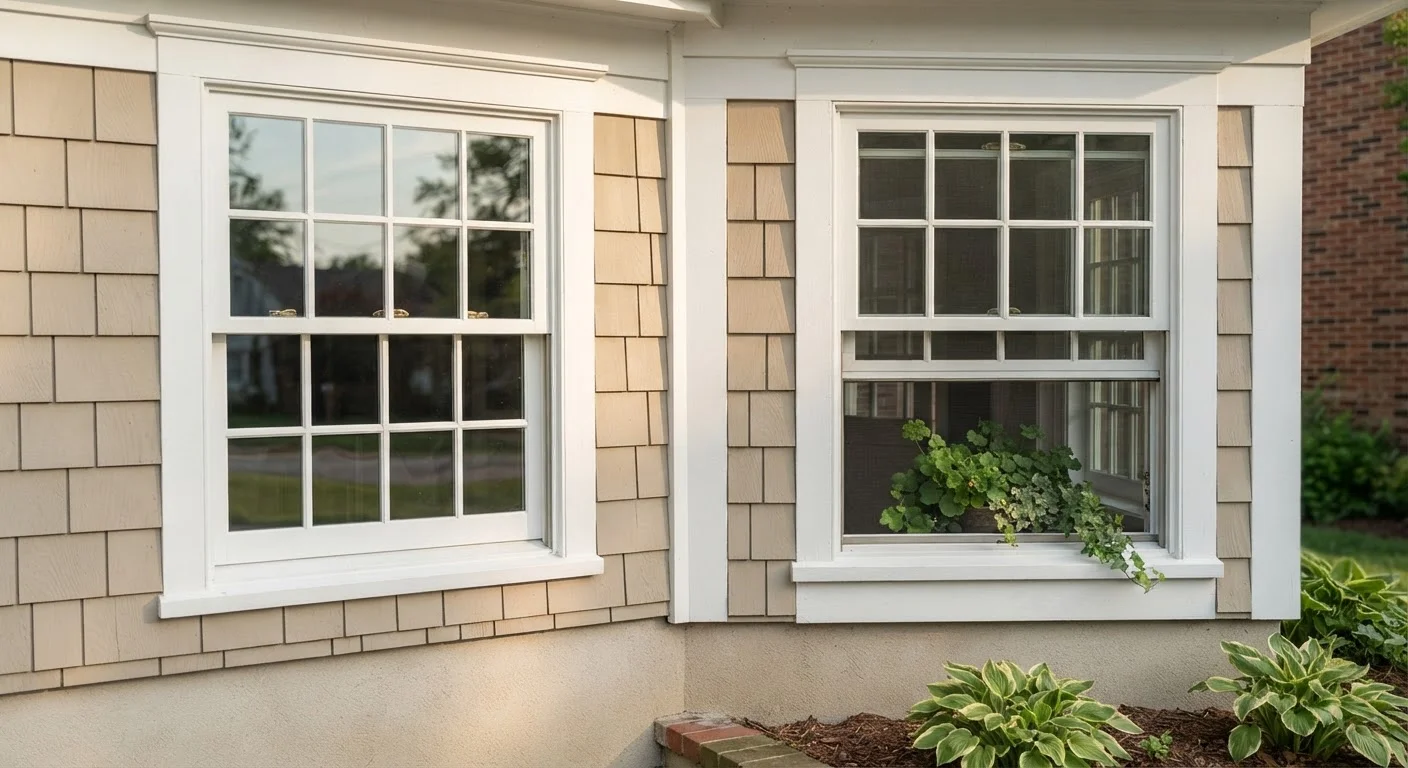
From the street, a double-hung and a single-hung window are virtually indistinguishable. Both have two rectangular panes stacked vertically inside a single frame, and both fit into standard wall openings. The difference is purely functional: in a single-hung window, only the bottom sash (the movable panel) slides up and down. The top sash is fixed in place. In a double-hung window, both sashes move independently — the bottom slides up, the top slides down.
That single mechanical distinction ripples into real-world differences in ventilation, cleaning, and long-term maintenance. Understanding it is the first step in deciding which style suits your renovation. For a broader look at how hung windows compare to other styles altogether, see Window Styles Explained.
| Criterion | Double-Hung | Single-Hung |
|---|---|---|
| Movable sashes | Both top and bottom | Bottom only |
| Ventilation control | Stack ventilation possible | Bottom opening only |
| Interior cleaning access | Both sashes tilt in (most models) | Bottom sash only (if tilt available) |
| Upper-floor exterior cleaning | From inside via tilt-in | Requires exterior access |
| Typical upfront cost | Higher | Lower |
| Moving parts / complexity | More (two sash systems) | Fewer (one sash system) |
| Fit in standard openings | Yes | Yes |
Ventilation: Why Two Moving Sashes Matter
One of the most practical advantages of double-hung windows is the ability to create what's sometimes called stack ventilation. By lowering the top sash and raising the bottom sash simultaneously, warm air — which rises naturally — exits through the top opening while cooler outdoor air enters through the bottom. This works without a fan and is especially effective in bedrooms and kitchens during mild weather.
Single-hung windows only allow airflow through the bottom opening. That's adequate ventilation in most situations, but it doesn't give you the same degree of control. If you're comparing hung windows to styles designed around airflow, sliding vs. casement windows explores how other operable styles manage ventilation differently.
Cleaning and Maintenance: The Upper-Floor Problem
Cleaning is where the double-hung window earns its price premium for many homeowners. Most modern double-hung models include tilt-in sashes — both upper and lower sashes pivot inward so you can clean the exterior glass surface from inside the house. This is particularly valuable on second or third floors, where reaching the outside of a fixed sash would otherwise require a ladder or professional cleaning service.
Single-hung windows typically include a tilt-in feature only on the bottom sash, if at all. The fixed upper sash must be cleaned from outside, which is manageable on the ground floor but becomes inconvenient or unsafe on upper levels.
In terms of mechanical maintenance, single-hung windows have fewer moving parts — fewer balance springs, fewer locking mechanisms, fewer points of potential wear. Over a 20- to 30-year lifespan, this simplicity can translate to fewer repairs, though the trade-off is reduced functionality.
Check Tilt-In Availability Before You Buy
Not every single-hung or double-hung window includes a tilt-in sash as a standard feature — it can sometimes be an upgrade or may depend on the frame material chosen. When gathering quotes from contractors or reviewing window specifications, ask specifically whether tilt-in functionality is included on each sash. This detail is easy to overlook and makes a meaningful difference if you're replacing windows on upper floors.
Cost and Replacement Considerations
Single-hung windows are generally less expensive than double-hung windows of the same size, frame material, and glass package. The cost gap varies by manufacturer and region, but the simpler hardware of a single-hung unit typically results in a lower unit price. For whole-house replacement projects where many windows are being swapped out at once, that difference can add up meaningfully.
Both window types fit the same standard rough openings, which means switching from single-hung to double-hung — or vice versa — during a replacement project is straightforward for a qualified installer. You're not changing the framing, just the window unit itself.
Glass selection is a separate decision that applies to both styles equally. Whether you choose single-hung or double-hung, you'll still need to decide between insulated glass configurations. See double-pane vs. triple-pane windows for guidance on matching glass performance to your climate.
This article is for informational purposes only. Window costs, code requirements, and installation practices vary by region. Always consult a licensed contractor and verify local building requirements before beginning a window replacement project.