

Key Takeaways
Start here
Why Window Style Matters More Than You Might Think
Core knowledge
The Most Common Window Styles and How They Work
Apply it
Matching Function to Location in Your Home
Before you decide
What to Consider Before Making Your Final Choice
Why Window Style Matters More Than You Might Think
When homeowners begin planning a window replacement, the first instinct is often to focus on cost or energy ratings. Both are important — but window style is the decision that shapes everything else. The style you choose determines how a window opens (or whether it opens at all), how easily you can clean it, whether it meets egress requirements in a bedroom, and how it reads visually from the street.
Style also affects what's possible structurally. Some styles require a wider rough opening; others are better suited to narrow wall spaces. Making a style decision early — before getting quotes — helps you have more productive conversations with contractors. If you're not yet familiar with the terminology contractors use, the window terminology guide is a helpful place to start.
The Most Common Window Styles and How They Work
Sash
The framed panel that holds the glass in a window. In operable windows, the sash is the part that moves.
Rough opening
The framed hole in the wall where a window is installed. Its dimensions determine which window sizes and styles can fit without structural changes.
Egress window
A window large enough to allow a person to escape in an emergency. Building codes in most US states require at least one egress window in each sleeping room.
Fixed window
A window that does not open. Fixed windows, like picture windows, are used for light and views but provide no ventilation.
Air infiltration
The unintended passage of outdoor air through gaps around a window. Less air infiltration generally means better energy efficiency and comfort.
Glazing
The glass portion of a window, including any coatings or gas fills between panes that affect energy performance.
Most homes in the United States use one or more of the following styles:
Double-Hung
Both the upper and lower sashes slide vertically. This is the most familiar style for a reason — it fits nearly any room, allows flexible ventilation (open the top, the bottom, or both), and many models have tilt-in sashes that simplify cleaning. It's a reliable, versatile choice.
Single-Hung
Similar in appearance to double-hung, but only the lower sash moves. The upper sash is fixed. This style is often slightly less expensive, but it offers less ventilation flexibility and can be harder to clean on upper floors.
Casement
A casement window is hinged on one side and swings outward using a crank handle. When fully closed, the sash presses firmly against the frame, which tends to reduce air leakage. Casements work well where you want a clear, unobstructed view and good ventilation, but they require clearance outside — they can't be installed behind a screen door or in front of a walkway.
Sliding (Gliding)
One or both sashes move horizontally along a track. Sliding windows suit wide, low wall spaces — such as above a kitchen counter — where a vertically operated window would be awkward. They're simple to operate and require no exterior clearance.
Picture
A picture window is fixed — it does not open. Its purpose is to frame a view and bring in maximum natural light. Because there are no moving parts, picture windows tend to be very energy efficient when properly glazed, but they provide no ventilation and cannot serve as emergency egress. They're most often used in living rooms or combined with operable windows on either side.
There are also several less-discussed styles — awning, hopper, and jalousie — that solve specific ventilation challenges. See the guide to awning, hopper, and jalousie windows if you're dealing with tight spaces or unusual wall placements.
Matching Function to Location in Your Home
A useful way to narrow down your style choice is to think room by room:
- Bedrooms: Building codes in most US jurisdictions require at least one window to meet egress standards — a minimum opening size that allows emergency exit. Double-hung and casement windows generally meet these requirements; picture windows do not. Confirm the specific requirements with your local building department.
- Kitchens: Sliding or casement windows are popular above sinks and counters because they're easy to operate with one hand and suit horizontal wall spaces well.
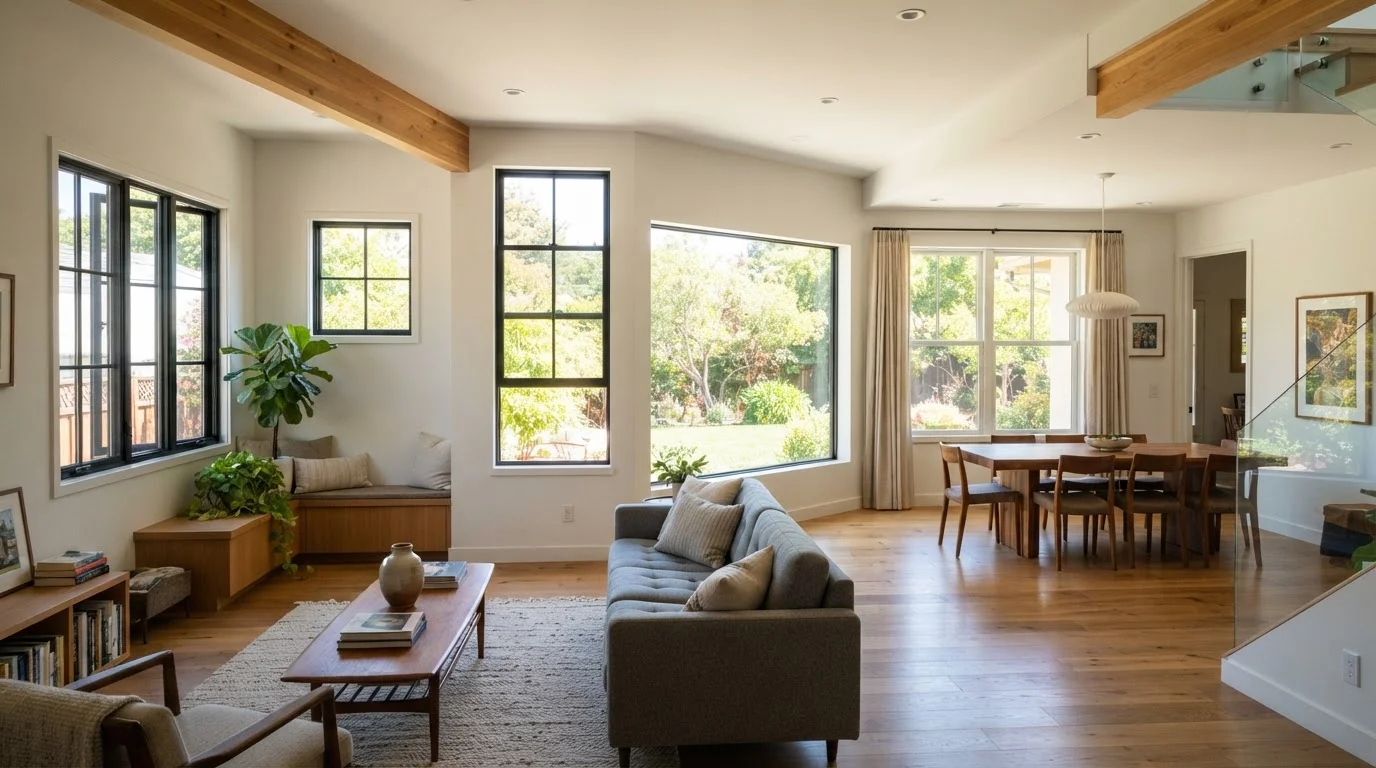
- Living and dining rooms: Picture windows paired with flanking casements or double-hungs combine unobstructed views with the ability to ventilate the room.
- Bathrooms: Awning windows (hinged at the top, opening outward from the bottom) allow ventilation even in rain and can be placed high on the wall for privacy.
Architectural style also plays a role. Matching your window style to your home's architecture covers how different home types — colonial, craftsman, ranch — align with particular window profiles.
What to Consider Before Making Your Final Choice
Write Down Your Priorities Before Consulting a Contractor
Before your first contractor conversation, jot down which rooms need new windows, whether ventilation or views matter more in each space, and any access or mobility considerations. Having this list ready helps the contractor give you more relevant style recommendations — and helps you evaluate their suggestions more confidently.
Once you've developed a sense of which styles appeal to you functionally, a few practical questions will help you finalize your decision:
- What are the existing rough opening dimensions? Staying close to the current size avoids structural work and typically reduces cost.
- What does your climate call for? In very cold or very hot climates, air sealing performance becomes more significant — a factor where casement windows often have an advantage over double-hung.
- Does the style meet any code requirements? Bedrooms, basement windows used as egress, and certain commercial-adjacent residential spaces may have minimum opening size requirements.
- What maintenance are you comfortable with? Some styles and frame materials require more upkeep than others over time.
Before locking in a style, it's worth reviewing questions to ask a contractor before choosing a window style — practical prompts that help you use your consultation time well. And if you've heard confident claims about certain styles — that they always perform better, or always cost less — it's worth checking those assumptions against common myths about window styles before you decide.
This article is for general informational purposes only. Window installation requirements, egress codes, and permit rules vary by location. Always consult a licensed contractor and your local building department before beginning any window replacement project.