

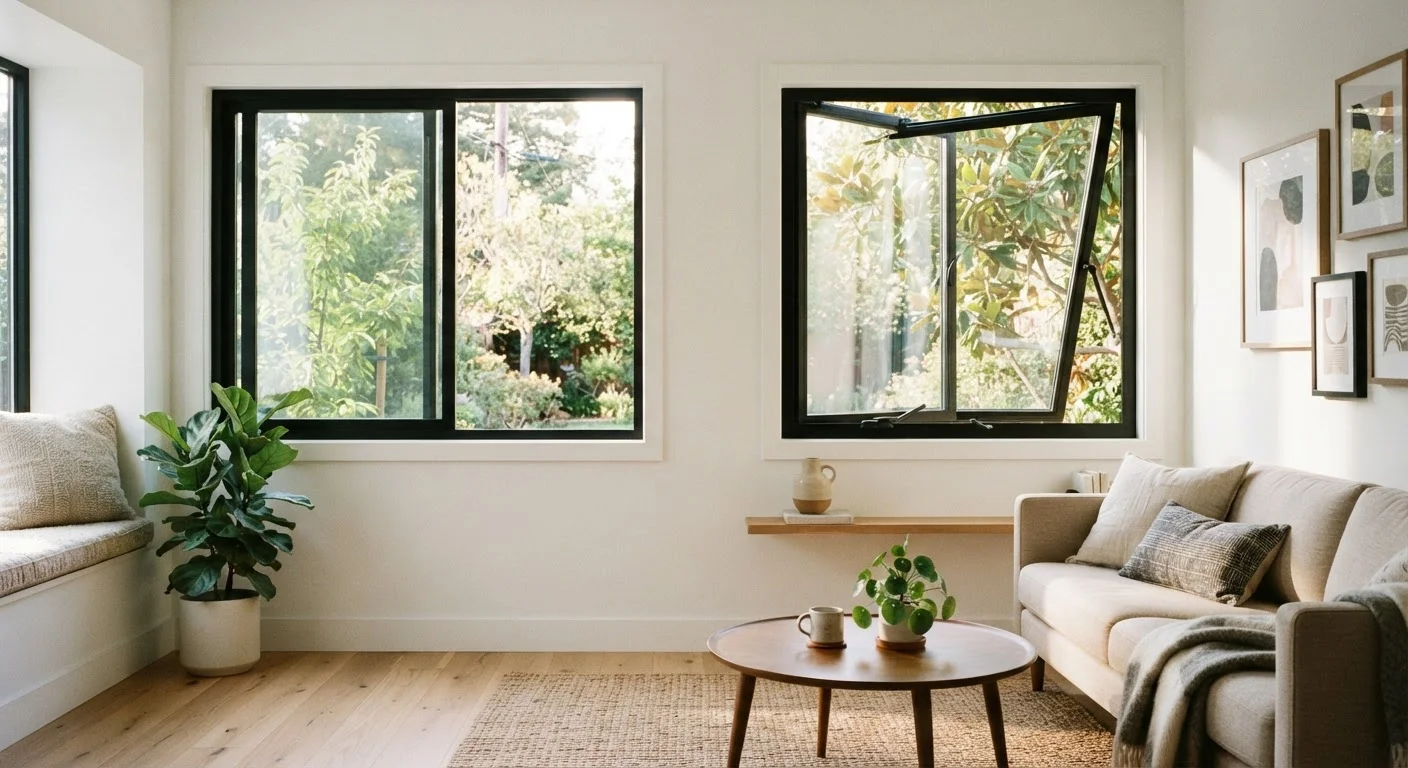
Key Takeaways
Option A
Sliding Windows
The space-conscious, low-profile solution.
Best for: Rooms with limited wall depth or exterior clearance where nothing can protrude outward.
Option B
Casement Windows
The high-ventilation, easy-crank alternative.
Best for: Homeowners who prioritize maximum airflow, tight seals, and effortless one-handed operation.
If you have a patio, walkway, or plantings directly outside the window
Sliding Windows
Sliding windows stay within the wall plane when open, so there is nothing to bump into or clear space around outside.
If maximum fresh air and cross-ventilation are your top priority
Casement Windows
Casement sashes can swing nearly fully open and angle to scoop prevailing breezes, delivering more airflow than any sliding design.
If you have arthritis, limited grip strength, or difficulty with repetitive motion
Casement Windows
A single crank handle requires minimal grip and can be operated from a comfortable position, unlike sliding sashes that may need two-handed pulling.
If you are replacing wide, horizontal windows in a kitchen or basement
Sliding Windows
Sliding windows fit wide, low openings naturally and are widely available in horizontal proportions that suit these spaces.
If energy efficiency and draft prevention are a primary concern
Casement Windows
When closed, the sash presses directly into the frame gasket on all four sides, creating one of the tightest seals available in an operable window.
How Each Window Style Actually Works
Understanding the mechanics is the starting point for any meaningful comparison. Sliding windows (also called gliding windows) have one or two sashes that travel horizontally along a track. One sash is typically fixed; the other slides left or right. Nothing moves outward — the entire operation happens within the plane of the wall.
Casement windows are hinged on one side and swing outward — or occasionally inward — using a hand crank mounted at the sill. The entire sash rotates away from the frame, similar to a door. For a deeper look at how casement hardware and placement decisions work together, see how casement windows open and where they belong.
This mechanical difference — sliding versus swinging — drives nearly every practical trade-off between the two styles.
Ventilation: How Much Air Each Style Moves
Ventilation potential is one of the sharpest differences between these two styles. A sliding window can open at most half its total width — the fixed sash always blocks the other half. In practice, the usable ventilation area on a 36-inch sliding window is roughly 18 inches of opening.
A casement window can swing nearly its full frame width open. Because the sash acts like a scoop, it can be angled to catch prevailing breezes even when wind isn't blowing directly toward the house. This makes casements particularly effective for rooms that rely on natural ventilation — kitchens, bathrooms, and bedrooms.
| Criterion | Sliding Windows | Casement Windows |
|---|---|---|
| How it opens | Sash glides horizontally on track | Sash cranks outward on a hinge |
| Maximum ventilation area | Up to 50% of frame width | Up to ~90% of frame width |
| Exterior clearance needed | None — stays within wall plane | Full sash width must be clear |
| Ease of operation | Grip-and-slide; may need two hands | Single crank; minimal grip force |
| Weatherseal when closed | Track-based; moderate seal | Compression seal on all four sides |
| Best opening shape | Wide and horizontal | Tall and vertical |
| Interior obstacle risk | Low — hardware stays at edge | Crank can conflict with counters or seats |
If ventilation in a secondary space like a bathroom is the core goal, it's worth comparing other less-common alternatives as well. Our overview of awning, hopper, and jalousie windows covers styles designed specifically for ventilation in tight or awkward spaces.
Ease of Use and Accessibility
For homeowners aged 50 and older, ease of operation is often as important as aesthetics. Sliding windows require you to grip and pull — sometimes with two hands — which can be challenging for anyone with reduced grip strength or arthritic joints. The track and locking hardware also needs periodic cleaning to keep the sash moving smoothly.
Casement windows use a single crank mechanism at the sill. Turning the crank requires minimal force, and the motion is consistent and controlled. Many people find this easier to operate from a kitchen counter position or while seated. The latch typically requires only a light wrist motion to engage. This accessibility advantage is frequently cited by occupational therapists who advise clients on home modification priorities.
It's worth noting a separate accessibility context: the same logic of swing direction and clearance applies to other home features. If you're also evaluating bathroom updates, our comparison of inward- vs. outward-opening walk-in tub doors walks through how door direction affects usability in confined spaces.
Space Requirements and Where Each Style Fits
Sliding windows have a clear advantage wherever exterior clearance is limited. If a window sits above a walkway, faces a deck railing, or is positioned behind shrubbery, a casement sash swinging outward creates a real obstacle — or a hazard. Sliding windows are also well-suited to wide, horizontal openings common in basements, kitchens, and garages.
Casement windows need unobstructed exterior space equal to the sash width. They are better suited to locations where the window faces open yard or garden, and where the crank mechanism won't be blocked by deep counters or furniture on the interior side.
Interior clearance matters too. A crank handle at the sill can conflict with a deep kitchen counter, a window seat, or blinds that hang close to the sill. Measure carefully before committing to a casement in any built-in situation.
If you are comparing window styles more broadly and want to understand how operable windows as a category differ from fixed ones, our article on fixed vs. operable windows provides a useful foundation. And for a parallel comparison of another common operable style, see double-hung vs. single-hung windows.
This article is for general informational purposes only. Window performance, costs, and code requirements vary by location, climate, and home construction. Always consult a licensed window contractor and verify local building requirements before beginning any replacement project.