

| Standard Grab Bar Load Rating | 250 lbs minimum (Common industry guideline for residential grab bars) |
| Comfort-Height Toilet Seat Height | 17–19 inches (ADA-referenced residential guideline) |
| Recommended Turning Radius | 60-inch diameter (ADA guidelines, applied as residential best practice) |
| Minimum Doorway Width for Wheelchair Access | 32–36 inches clear (ADA-referenced residential guideline) |
| Roll-In Shower Minimum Size | 36" × 60" (Common accessibility design benchmark) |
Why This Glossary Exists
Bathroom accessibility renovations come with a vocabulary that can feel overwhelming — ADA clearances, transfer benches, zero-threshold entries, and more. When contractors and designers use these terms casually, homeowners without a renovation background can feel lost before the planning even begins.
This glossary defines the terms you are most likely to encounter when researching or discussing an accessible bathroom project. Knowing what these words mean puts you in a stronger position to ask the right questions, read contractor proposals with confidence, and make decisions that reflect your actual needs.
For a broader look at what these features mean in practice, see what an accessible bathroom actually means for homeowners planning to stay in their homes long-term.
ADA Clearance
The minimum open floor space required around fixtures like toilets, sinks, and showers so a person using a wheelchair or mobility aid can approach and use them safely. In residential settings, these guidelines are often used as a practical benchmark even when not legally required.
Zero-Threshold Entry
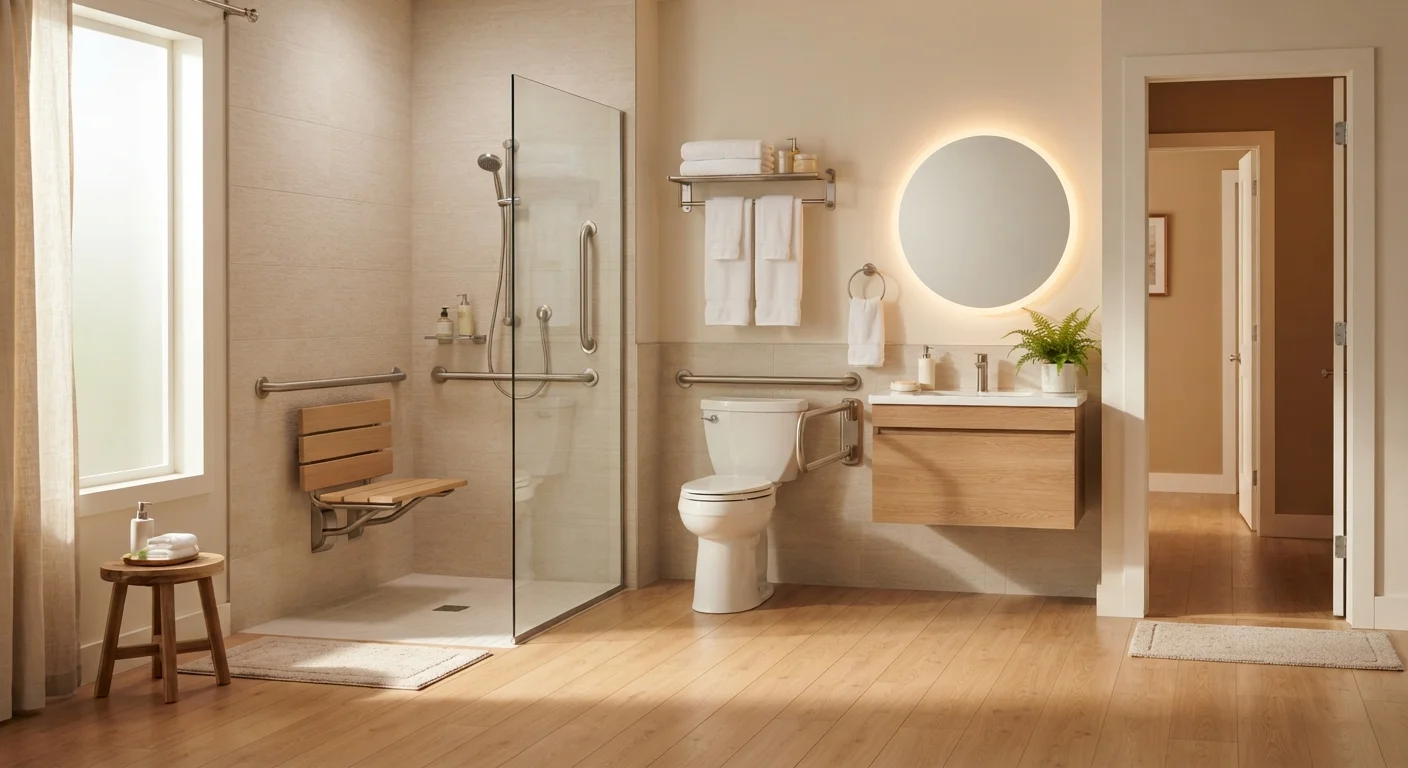
A shower or tub opening with no raised curb or lip at floor level, allowing someone to walk or roll in without stepping over an obstacle. Also called a curbless or barrier-free entry, this feature significantly reduces tripping hazards.
Grab Bar
A fixed, wall-mounted bar designed to support a person's weight while sitting, standing, or transferring between surfaces. Grab bars must be anchored into wall studs or a solid backing — decorative towel bars are not a safe substitute.
Transfer Bench
A seat that extends from inside a shower or tub to outside its edge, allowing a person to sit down outside and slide across into the bathing area without stepping over a threshold. Useful for individuals with limited lower-body mobility.
Comfort-Height Toilet
A toilet with a seat height of 17 to 19 inches from the floor — several inches taller than a standard toilet. This height makes sitting down and standing up easier, particularly for people with knee, hip, or back limitations.
Turning Radius
The circular floor area — typically 60 inches in diameter — needed for a wheelchair to complete a full turn. Bathrooms designed with this clearance allow independent maneuvering for wheelchair users.
Fold-Down Bench
A wall-mounted shower seat that folds flat against the wall when not in use, preserving floor space in smaller bathrooms. When lowered, it provides a stable surface for seated bathing.
Handheld Showerhead
A showerhead attached to a flexible hose rather than a fixed wall mount, allowing the spray to be directed precisely. It can be used while seated and makes rinsing easier for people with limited reach or mobility.
Non-Slip Flooring
Flooring materials or surface treatments with a higher coefficient of friction — meaning they resist slipping when wet. Options include textured tile, slip-resistant coatings, and certain natural stone finishes.
Blocking (Wall Blocking)
Solid wood or material installed inside a wall cavity during construction or renovation to provide a secure anchor point for grab bars or other hardware. Installing blocking during a renovation is far easier than retrofitting it later.
Roll-In Shower
A fully curbless shower large enough to accommodate a wheelchair inside the shower area itself. Typically at least 36 by 60 inches, though larger dimensions improve usability.
Thermostatic Valve
A shower or faucet control that maintains water at a preset temperature, preventing sudden scalds from hot-water surges. This is particularly important for individuals with reduced skin sensitivity or slower reaction times.
Key Terms in Context
The definitions above cover individual concepts, but it helps to understand how they connect during a real renovation. A zero-threshold shower, for example, is most effective when paired with a fold-down bench and a handheld showerhead — those three features together support safe, seated bathing. Similarly, grab bars positioned near a comfort-height toilet form a safety system, not just separate additions.
Clearance measurements matter more than many homeowners expect. A bathroom that meets turning radius requirements will accommodate a wheelchair or walker, but only if the door width and fixture placement are also considered together. These decisions are best made with a licensed contractor who understands residential accessibility standards.
If you are ready to move from terminology to action, a start-to-finish renovation roadmap can help you sequence decisions, set a realistic budget, and work effectively with a contractor. For shower-specific features, safety features worth discussing with your contractor covers grab bars, non-slip flooring, and built-in seating in detail.
Lighting and contrast are often overlooked but play a significant role in bathroom safety — how lighting and colour contrast reduce fall risk is worth reading alongside this glossary. You can also explore options specific to walk-in tubs and walk-in showers as you narrow your choices.
This article is for informational and educational purposes only. Accessibility standards and building code requirements vary by location. Always consult a licensed contractor and verify local permit requirements before beginning any renovation work.