

| Grab bar typical placement height | 33–36 inches from the floor (horizontal bars) (ADA Accessibility Guidelines reference range) |
| Handrail required height range | 34–38 inches above stair nosing (International Residential Code (IRC) general guidance) |
| Minimum grab bar diameter for gripping | 1.25–1.5 inches outer diameter (ADA Standards for Accessible Design) |
| Typical grab bar weight rating | 250 lbs minimum when properly anchored (General industry standard; verify product specifications) |
| Safety rail installation | No drilling required — clamp or freestanding |
| Wall anchoring requirement | Grab bars must anchor into studs or blocking (Standard contractor and code guidance) |
Why the Terminology Matters
If you've started researching bathroom safety upgrades, you've probably seen the terms grab bar, handrail, and safety rail used almost interchangeably — but they aren't the same thing. Each serves a distinct function, mounts differently, and belongs in a specific location. Using the wrong type in the wrong spot doesn't just look out of place; it can create a false sense of security.
For homeowners aged 50 and older planning a bathroom renovation, understanding these differences helps you have a more informed conversation with a contractor and ensures the finished result genuinely supports your safety and independence.
Grab Bar
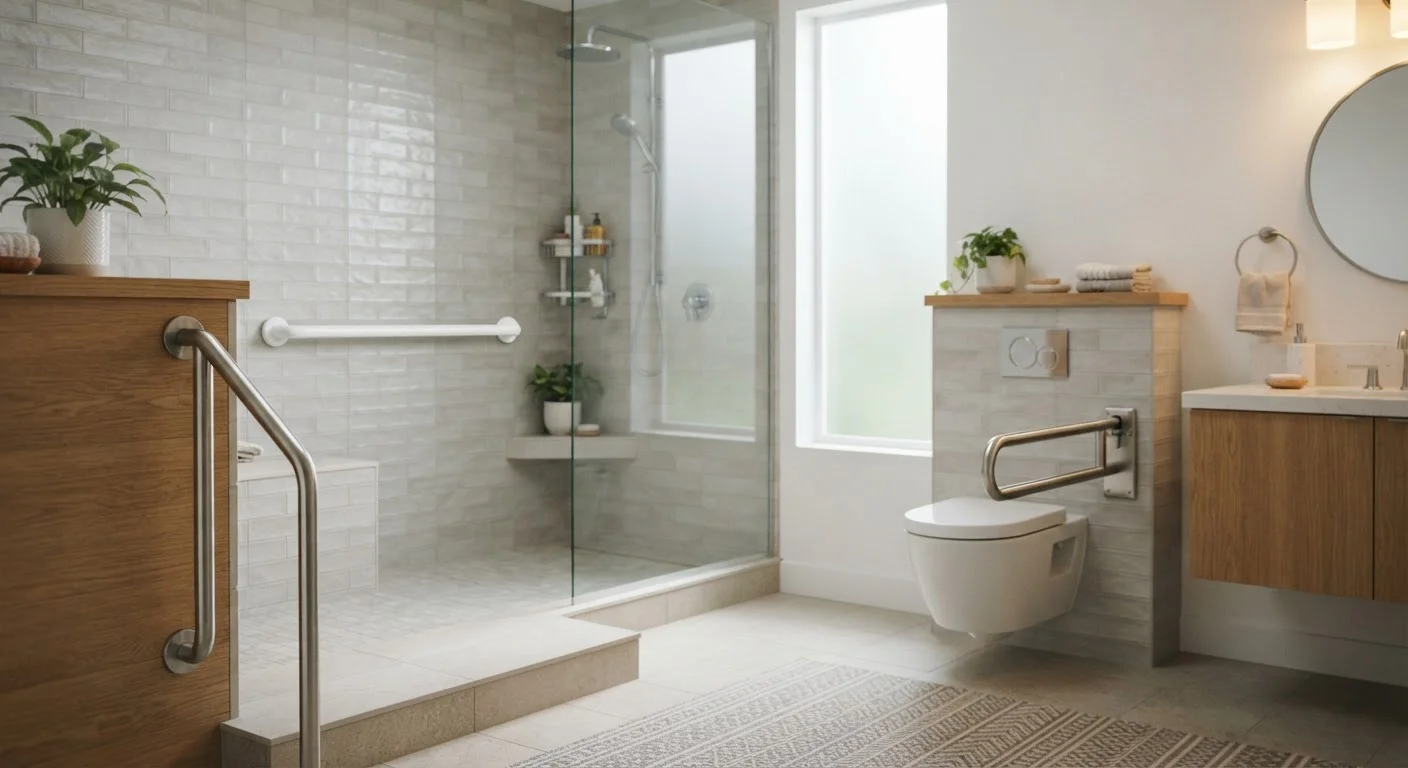
A wall-mounted, fixed-position bar designed to bear body weight at a single point of contact. Used inside or beside showers, tubs, and toilets to assist with transitions such as sitting, standing, or stepping in.
Handrail
A continuous rail gripped and slid along during movement over a distance — typically along stairs, ramps, or hallways. Often regulated by building codes for grip diameter and mounting height.
Safety Rail
A freestanding or clamp-mounted support fixture that does not require wall anchoring. Common forms include toilet safety frames and bathtub rails. Suitable for temporary or rental situations, with limitations on load reliability.
Wall Blocking
A piece of solid lumber or structural panel installed inside the wall cavity during construction or renovation specifically to give grab bars a secure anchor point beyond standard drywall.
Side Transfer
A technique for moving laterally from one surface to another — for example, from a wheelchair to a shower seat — using a grab bar placed at the side for stability and leverage.
Grab Bars: Steady Support in the Wet Zone
Grab bars are the fixtures you'll most often see inside or immediately adjacent to a shower or bathtub. Their job is to provide a stable, stationary point to grip when transitioning — stepping in, lowering yourself to a seat, or standing back up. They are designed to bear significant body weight and must be anchored directly into wall studs or solid blocking, not just into drywall or tile.
Grab bars typically run horizontally, diagonally, or vertically depending on their purpose and placement height. A horizontal bar near a shower seat aids a side transfer; a diagonal bar inside a shower entry helps with the step-over motion. Placement matters enormously — a bar mounted at the wrong angle or height for your height can actually throw off your balance rather than support it.
Common grab bar locations include:
- Inside the shower or tub surround
- Beside the toilet (known as a side-transfer position)
- At the shower entry threshold
If you're planning a walk-in shower or tub installation, grab bar placement is one of the most important details to discuss with your contractor upfront. See safety features worth raising before work begins for a practical list of questions to ask.
Handrails: Continuous Guidance Along a Path
Handrails are continuous rails meant to be gripped and slid along as you move — up stairs, down a ramp, or along a hallway. Unlike grab bars, which are used at a single stationary point, handrails guide movement over distance. Building codes generally require handrails on staircases above a certain number of steps, and the specifications for grip diameter, height, and end treatment are regulated for good reason.
In a bathroom context, a handrail along a step into a sunken tub or beside a bathroom entry ramp would be appropriate. A handrail is not a substitute for a grab bar inside a shower stall — it isn't positioned or anchored for that kind of point-load use.
| Grab bar typical placement height | 33–36 inches from the floor (horizontal bars) (ADA Accessibility Guidelines reference range) |
| Handrail required height range | 34–38 inches above stair nosing (International Residential Code (IRC) general guidance) |
| Minimum grab bar diameter for gripping | 1.25–1.5 inches outer diameter (ADA Standards for Accessible Design) |
| Typical grab bar weight rating | 250 lbs minimum when properly anchored (General industry standard; verify product specifications) |
| Safety rail installation | No drilling required — clamp or freestanding |
| Wall anchoring requirement | Grab bars must anchor into studs or blocking (Standard contractor and code guidance) |
Safety Rails: Freestanding or Clamped Support
Safety rails — sometimes called toilet safety frames or tub rails — are freestanding or clamp-mounted fixtures that don't require drilling into walls. They typically straddle a toilet or hook over the edge of a bathtub to provide armrests or hand grips for sitting and standing.
Because they don't require wall anchoring, safety rails can be a lower-cost, renter-friendly option. However, they have real limitations: a clamp-on tub rail can shift under load if the tub edge isn't perfectly flat, and freestanding toilet frames may tip if the user leans heavily to one side. They are often appropriate as a short-term or temporary measure, but for long-term renovation projects, wall-anchored grab bars generally offer greater reliability. Always verify weight ratings and consult a contractor or occupational therapist before relying on a clamped fixture.
For a broader look at how these fixtures fit into accessible bathroom design — including how walk-in showers and walk-in tubs integrate support features — see accessibility standards for residential walk-in showers and safety features built into walk-in tubs.
Choosing the Right Fixture for Each Location
The simplest way to think about it: grab bars belong at fixed-point transitions in wet areas; handrails belong along continuous paths of travel; and safety rails are portable or semi-permanent aids suited to specific furniture like toilets or standalone tubs.
A well-planned bathroom renovation will often include more than one type. A contractor experienced in accessible bathroom design can assess your specific layout, your mobility needs, and the structural condition of your walls to recommend the right combination — and ensure everything is anchored properly. Incorrect installation is one of the most common reasons support fixtures fail when they're needed most.
If you're weighing a larger bathroom upgrade, comparing walk-in showers and walk-in tubs can help you understand which format best supports your long-term independence.
This article is for general informational purposes only. Always consult a licensed contractor and, where appropriate, an occupational therapist before selecting or installing bathroom safety fixtures. Local building codes and permit requirements vary — verify requirements with your local authority before work begins.