

Key Takeaways
Our Verdict
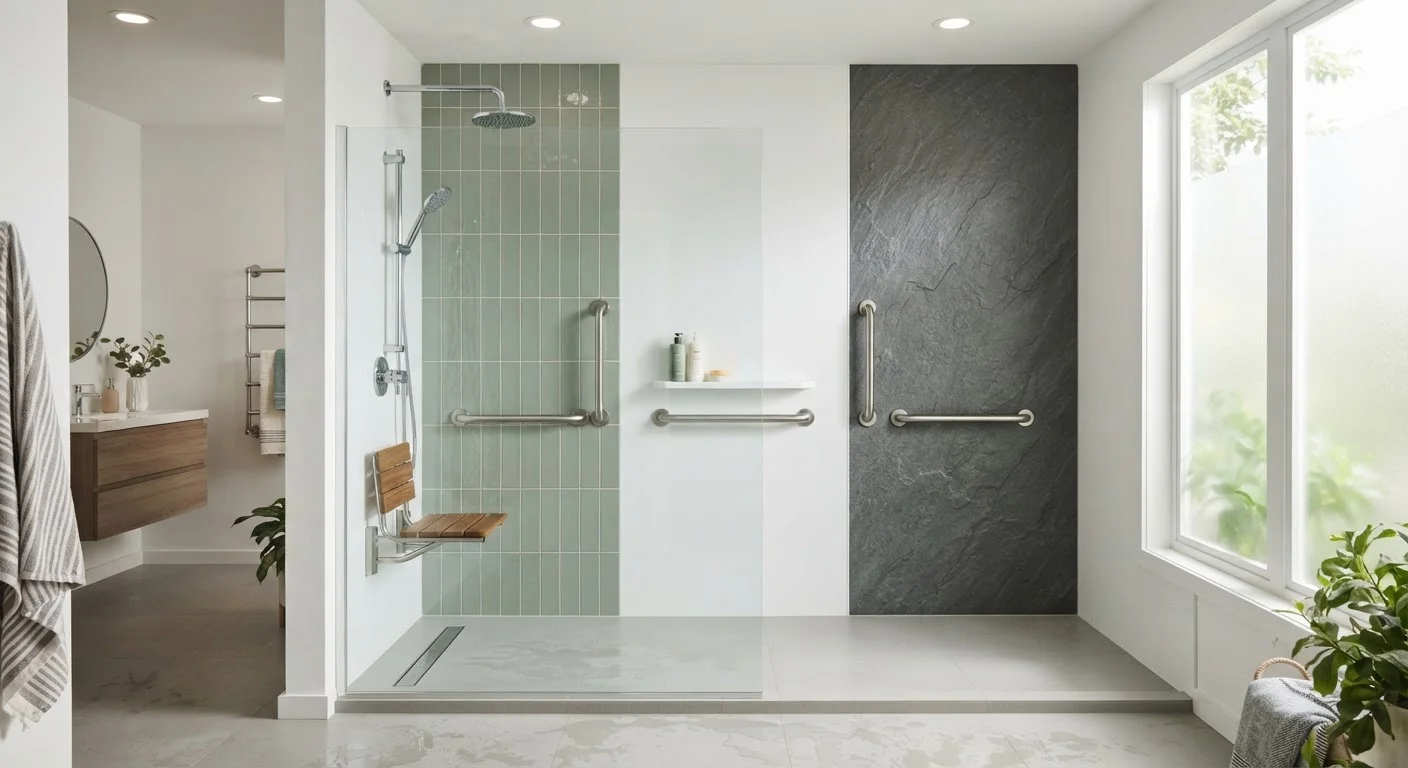
Each surround material suits a different set of priorities. Tile rewards those who value design customization and plan for regular upkeep. Acrylic is a practical, budget-conscious option for straightforward installations. Stone resin is worth considering when ease of maintenance and longevity are the top concerns, particularly for older homeowners seeking a low-effort daily routine.
| Best for | Recommended |
|---|---|
| Homeowners who want custom color, pattern, or texture choices | Tile |
| Those working within tighter budgets or shorter renovation timelines | Acrylic |
| Older adults prioritizing minimal cleaning and long-term durability | Stone Resin |
Why the Surround Material Is Worth Getting Right
The walls surrounding a walk-in shower — collectively called the surround — take a significant amount of daily moisture, soap residue, and cleaning contact. Choosing the wrong material can mean years of frustrating upkeep, water damage hidden behind walls, or a surface that becomes slippery and difficult to maintain as your needs change.
For older homeowners in particular, ease of cleaning, slip resistance, and low long-term maintenance can be just as important as appearance. If you're still weighing whether a walk-in shower is the right direction for your bathroom, the comparison of walk-in showers versus walk-in tubs covers that decision in detail. Once you've settled on a shower, the surround material deserves careful thought.
Tile: Versatile but High-Maintenance
Ceramic and porcelain tile remain the most widely used shower surround materials. They're available in hundreds of colors, sizes, and finishes, and a skilled installer can create a fully customized look. Properly installed tile is highly durable and water-resistant at the surface level.
The challenge lies in the grout lines — the narrow filled joints between each tile. Grout is porous and absorbs moisture over time. Without regular sealing and cleaning, grout can discolor, crack, or harbor mold. For homeowners with limited mobility or stamina for cleaning, scrubbing grout lines can become a genuine burden.
Tile installation is also the most labor-intensive of the three options. A contractor must properly prepare the substrate (the wall surface underneath), apply a waterproofing membrane, set each tile individually, and grout. This process typically takes several days and requires drying time between stages. Errors in waterproofing at the installation stage can cause water to penetrate the wall — damage that may not become visible for months.
| Tile | Acrylic | Stone Resin | |
|---|---|---|---|
| Upfront cost | Moderate to high | Lower | Higher |
| Installation time | Several days | Often one day | One to two days |
| Grout lines | Yes — require sealing | None | None |
| Daily cleaning effort | Moderate to high | Low | Low |
| Durability | High if waterproofed well | Moderate | High |
| Design flexibility | Very high | Limited | Moderate |
| Weight | Heavy | Lightweight | Heavy |
If you're budgeting for a tile surround, the factors driving walk-in shower installation costs can help you understand what labor and materials typically represent.
Acrylic: Affordable and Fast to Install
Acrylic surrounds are factory-formed panels or units that are cut to fit and bonded directly to the wall. Because they arrive pre-finished, installation is significantly faster than tile — often completed in a single day — and there are no grout lines to worry about.
The smooth, seamless surface is easy to wipe down, which appeals to homeowners looking for a low-effort routine. Acrylic is also generally lighter than tile or stone resin, which can matter in older homes where wall framing may be less robust.
The trade-offs are worth understanding. Acrylic can scratch from abrasive cleaners or rough sponges, and the surface may dull or yellow over many years of use. It is also less rigid than tile or stone resin, so impacts — a dropped shampoo bottle, for example — can dent or crack panels. Repairs to acrylic panels are possible but may not be invisible.
For homeowners who want a clean, functional upgrade without a lengthy renovation timeline, acrylic is often a practical starting point. Your contractor can also advise whether your existing walls are suitable for direct panel adhesion or require additional preparation.
Stone Resin: Durable and Low-Maintenance
Stone resin panels are made from a composite of natural stone particles and binding resin. They are engineered to be non-porous — meaning water and soap cannot soak into the surface — and they carry no grout lines. A damp cloth is typically sufficient for routine cleaning.
These panels tend to be heavier and more rigid than acrylic, giving them a more substantial, premium feel. Many homeowners describe the surface as closer in appearance to natural stone without the ongoing sealing requirements that natural stone demands.
The primary consideration is cost. Stone resin panels generally carry a higher upfront price than either tile or acrylic. Installation requires precise fitting and may take longer than acrylic but is usually faster than a full tile job.
Ask About the Waterproofing Layer
Regardless of which surround material you choose, the waterproofing membrane installed beneath it is critical to preventing long-term water damage. Ask any contractor you interview to explain exactly how they waterproof the walls before the surround goes on. A thorough answer — covering the membrane type, how seams and corners are treated, and whether they follow a recognized installation standard — is a sign of a careful, experienced professional.
For a thorough look at what happens during the installation process itself — including how contractors assess your bathroom's suitability — see what contractors evaluate before installing a walk-in shower.
Questions to Ask Before You Decide
No single material is right for every household. Before meeting with a contractor, it's helpful to think through a few practical questions:
- How often are you willing to clean the shower walls? If deep cleaning is difficult, grout-free surfaces (acrylic or stone resin) reduce that burden.
- What is your renovation timeline? Tile installations take longer; acrylic panels can restore a functional shower more quickly.
- What is your long-term budget? Acrylic may cost less upfront, but replacement or repair costs differ across materials over a 10–20 year span.
- Are there structural considerations? An older home may have walls that need reinforcement before heavy tile or stone resin can be mounted. A qualified contractor should assess this before work begins.
A broader overview of the full shower planning and installation process — from design to upkeep — is available in the end-to-end walk-in shower guide.
This article is for informational purposes only. Material performance, installation requirements, and costs vary by product, home condition, and local contractor. Always consult a licensed professional before beginning any renovation work.