

Key Takeaways
Synthetic Roofing Materials
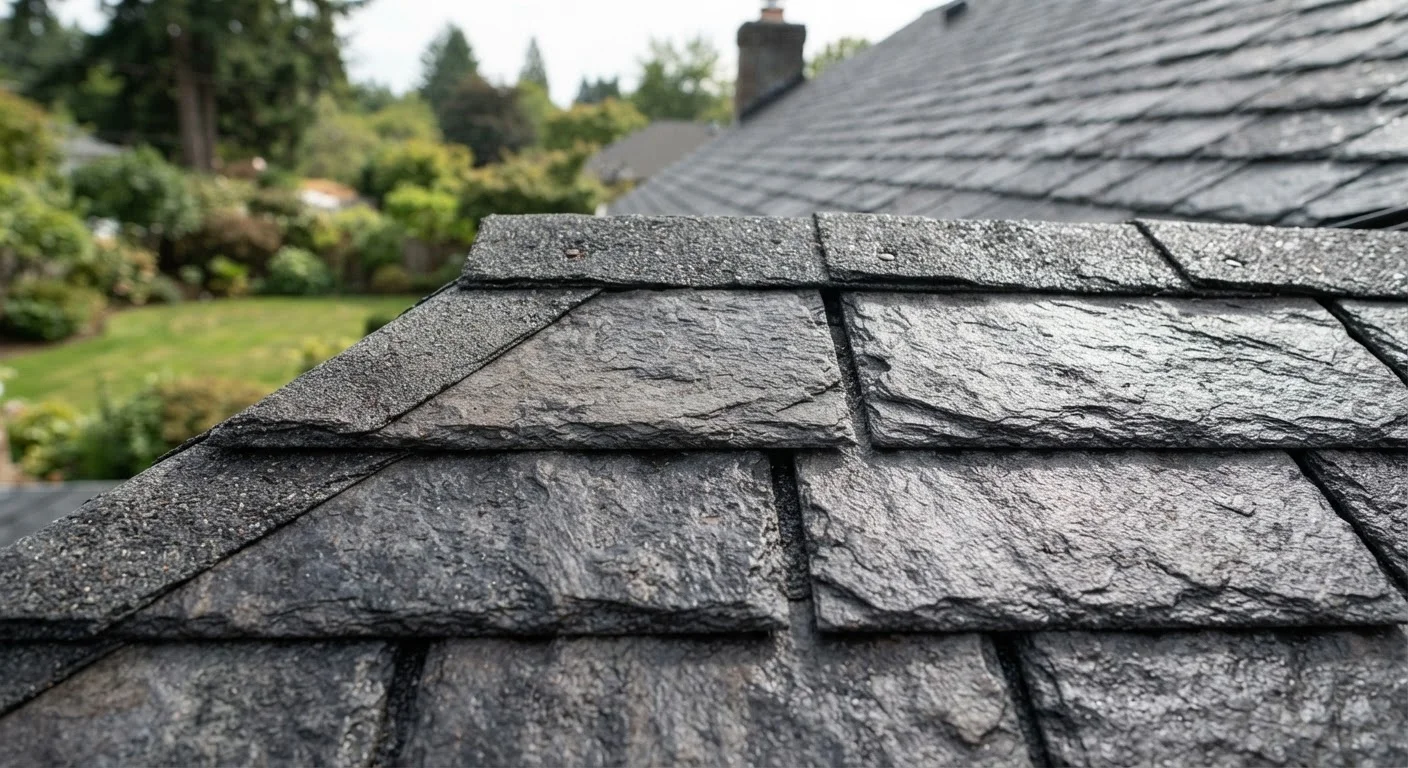
Synthetic roofing materials are manufactured products designed to look like natural materials — such as slate, wood shake, or clay tile — without being made from those materials. They are typically produced from recycled plastics, rubber, polymers, or composite blends. The goal is to achieve a similar aesthetic at a lighter weight and, often, a lower installed cost.
Many synthetic products are engineered to achieve Class 4 impact resistance ratings under UL 2218 testing, which can qualify homeowners for insurance discounts in some states — though this varies by insurer and policy.
What Synthetic Roofing Actually Is
When contractors or product brochures use terms like composite shingles, faux slate, or engineered roofing, they are referring to the same broad category: roofing products manufactured to resemble natural materials but made from synthetic compounds. The most common base materials include recycled rubber (often from tires), reclaimed plastics, fiberglass, and various polymer blends — sometimes in combination.
Manufacturers mold these compounds into shapes and textures that mimic the look of natural slate tiles, wood shakes, or clay tiles. Pigments are added to replicate color variation. The result is a shingle or tile that, from the curb, can closely resemble the real thing.
For a broader look at how synthetic fits alongside other roofing options, see Roofing Materials Explained.
How Synthetic Differs from Natural Slate
Natural slate is quarried stone — a metamorphic rock that splits into flat slabs. It is heavy (often 800–1,500 lbs per roofing square), expensive to source, and requires skilled installers. Its longevity is genuinely exceptional. Natural slate roofing can last 75 to 150 years or longer when properly installed.
Synthetic faux slate is engineered to approximate that look while solving some of slate's practical challenges:
- Weight: Synthetic slate typically weighs 40–200 lbs per roofing square — a fraction of the real thing — meaning fewer homes require structural reinforcement.
- Cost: Installation of synthetic slate generally runs lower than genuine slate, though it sits above standard asphalt shingles in price.
- Installation: Synthetic products can often be cut with standard roofing tools and installed by a broader pool of contractors, whereas natural slate installation requires specialized experience.
The trade-off is longevity and authenticity. Synthetic warranties typically run 40–50 years; real slate routinely outlasts that by decades.
40–200 lbs
Typical weight of synthetic slate per roofing square
Natural slate commonly weighs 800–1,500 lbs per roofing square, making structural load a key difference between the two.
Class 4
Highest impact resistance rating available
Many quality synthetic roofing products achieve a Class 4 UL 2218 rating, the highest standard for impact resistance in roofing products.
40–50 years
Typical manufacturer warranty for synthetic slate
Warranty terms vary significantly by product and manufacturer; actual performance depends on installation quality and climate conditions.
Performance Characteristics Worth Understanding
Synthetic roofing products are not uniform in quality. Performance depends heavily on the specific formulation and manufacturing process used. When evaluating any synthetic product, these characteristics matter:
- Impact resistance
- Many synthetic products achieve a Class 4 rating under standardized impact testing — the highest available rating — which can matter in hail-prone areas. Verify ratings for any specific product you're considering.
- UV and color stability
- Some earlier synthetic products faded or became brittle after prolonged UV exposure. Better-quality formulations now incorporate stabilizers, but fading over time remains a consideration.
- Fire ratings
- Most quality synthetic shingles carry a Class A fire rating, equivalent to asphalt shingles and natural slate.
- Thermal expansion
- Polymer-based materials expand and contract with temperature changes. Proper installation with appropriate fastening patterns accounts for this — an important reason to use an experienced installer.
Comparing expected lifespans across roofing materials? Our roofing material lifespan guide provides a quick reference.
What to Ask Before Choosing a Synthetic Product
Because synthetic roofing is a relatively newer category — widespread adoption has grown primarily since the early 2000s — independent, long-term performance data is still limited compared to natural materials with centuries of track record. That makes your due diligence especially important.
Request Physical Samples Before Deciding
Ask your contractor or supplier for actual shingle samples, not just brochure photos. View them in outdoor light and, if possible, ask to see an installed example on a nearby home. Synthetic materials can look different in person than in marketing materials, and seeing them at scale helps set realistic expectations.
Questions worth asking any contractor or supplier:
- What is the warranty, and what does it cover? Some warranties cover material defects only; others include labor. Understand the difference between a 40-year and a lifetime warranty in practical terms.
- Has this specific product been installed in your climate? Performance in freeze-thaw cycles or intense heat can vary.
- Who manufactures it, and how long have they been in business? A warranty is only as good as the company standing behind it.
- Is the installer certified or trained for this product? Some manufacturers require specific installer credentials for the warranty to remain valid.
It's also worth separating marketing claims from verified facts. Our article on common roofing myths addresses several misconceptions that apply to synthetic materials as well.
For cost context across material types, see roofing material costs and trade-offs.
This article is for informational and educational purposes only. Roofing decisions involve structural, code, and safety considerations that vary by location. Always consult a licensed roofing contractor and verify local permit requirements before beginning any roofing project.