

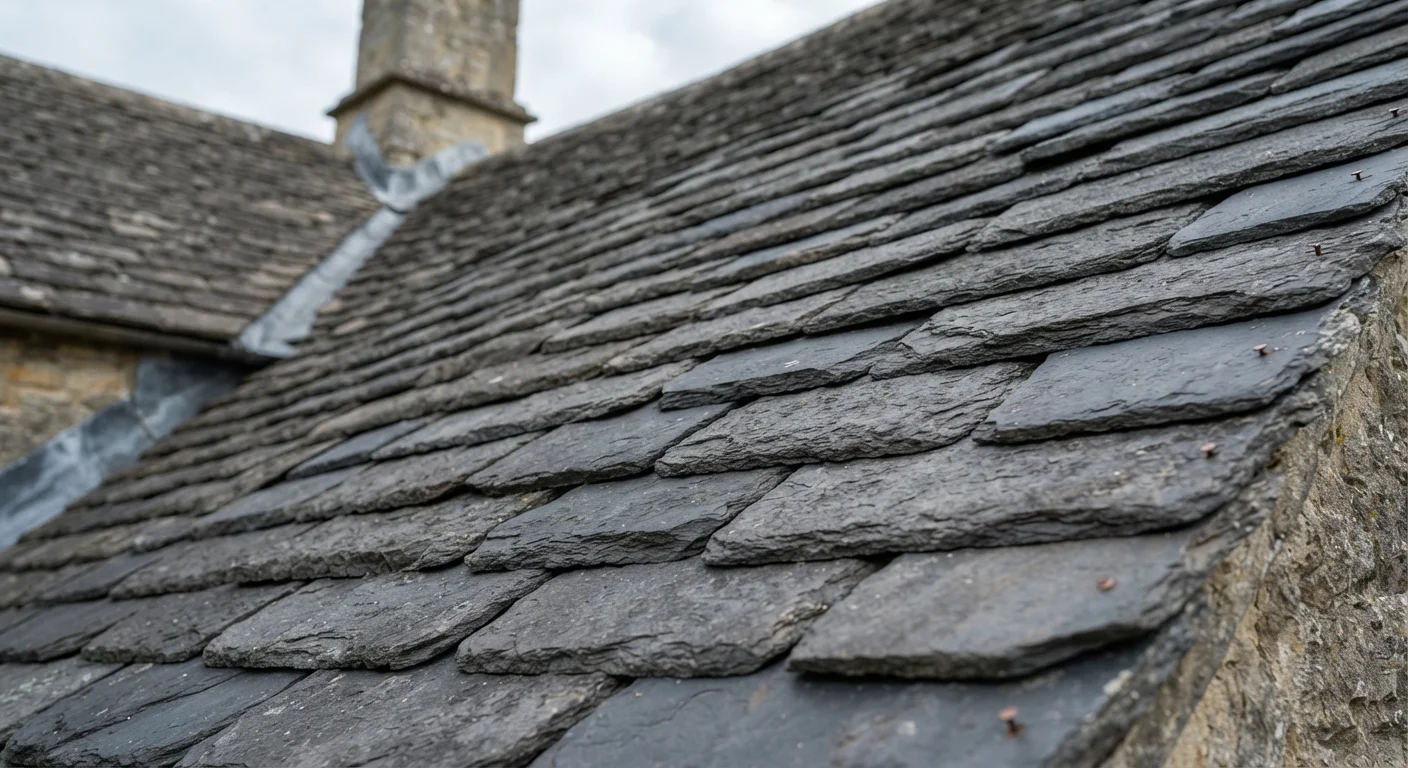
Key Takeaways
Exceptional lifespan — often 100+ years
Hard slate quarried from regions like Vermont has documented lifespans exceeding a century. In some cases, slate outlasts the original structural components of the home beneath it.
Virtually immune to weathering and rot
Slate absorbs very little water, resists freeze-thaw damage, and does not decay organically. It performs well across a wide range of climates, from cold northern states to humid southern ones.
Class A fire resistance rating
As a natural stone, slate is non-combustible and earns the highest fire-resistance classification. This can be a meaningful factor in areas with elevated wildfire risk.
Adds distinctive curb appeal and home value
Slate's natural texture, color variation, and visual depth are difficult to replicate authentically. Homes with genuine slate roofs are often noted positively in real estate listings.
Environmentally low-impact material
Slate requires no petroleum-based manufacturing and produces no significant chemical off-gassing. Its long lifespan also means fewer replacement cycles and less landfill waste over time.
Very high upfront material and labor cost
Slate installation can cost several times more per square foot than asphalt shingles. Labor costs are elevated because skilled slate installers are scarce, and the work is technically demanding.
Extremely heavy — may require structural upgrades
Natural slate can weigh four to seven times more than asphalt shingles. Many homes built before the 1980s may not have framing strong enough to carry this load without engineering modifications.
Requires specialist installers — hard to find
Fewer roofers are trained to work with natural slate than with asphalt or metal. Hiring an unqualified contractor risks improper installation and accelerated tile damage.
Individual tiles can crack under foot traffic or impact
Slate tiles are hard but brittle. Walking on the roof incorrectly, falling branches, or hail can crack individual tiles — each of which must be carefully replaced to avoid water intrusion.
Not suitable for low-slope roofs
Slate performs best on steeper roof pitches. On low-slope roofs, water drainage slows enough that moisture can work its way between tiles, leading to leaks and premature degradation.
Our Verdict
Natural slate is an exceptional roofing material for homeowners who can afford the upfront investment and whose homes can support the structural load. Its lifespan is unmatched among common residential materials, and it adds genuine long-term value — but it demands specialized installation, periodic expert maintenance, and careful structural planning before a single tile is laid.
Best suited to homeowners with older or historic homes, sufficient budget, and a long-term ownership horizon who want a roof they are unlikely to replace in their lifetime.
What Makes Slate Different From Other Roofing Materials
Slate is a naturally occurring metamorphic rock, formed over millions of years under intense heat and pressure. Unlike asphalt shingles — which are manufactured from fiberglass or organic felt coated with asphalt and mineral granules — slate tiles are quarried directly from the earth, cut into consistent shapes, and installed individually onto a roof deck.
This geological origin is exactly what gives slate its durability. The material is dense, non-porous, and highly resistant to freeze-thaw cycles, moisture absorption, and UV degradation. It does not rot, warp, or corrode. For a full comparison of how slate measures up over time, see our Roofing Material Lifespan at a Glance.
Slate tiles come in two broad categories: hard slate (typically from quarries in Vermont and Pennsylvania) and soft slate (often from Virginia and New York). Hard slate can last 125 years or more; soft slate typically ranges from 50 to 125 years depending on quality and climate. The distinction matters when evaluating long-term value.
The Advantages of Natural Slate
Slate's appeal goes well beyond aesthetics, though its appearance — layered, textured, and naturally varied in color — is genuinely striking. Here is a breakdown of where slate performs best.
Exceptional lifespan — often 100+ years
Hard slate quarried from regions like Vermont has documented lifespans exceeding a century. In some cases, slate outlasts the original structural components of the home beneath it.
Virtually immune to weathering and rot
Slate absorbs very little water, resists freeze-thaw damage, and does not decay organically. It performs well across a wide range of climates, from cold northern states to humid southern ones.
Class A fire resistance rating
As a natural stone, slate is non-combustible and earns the highest fire-resistance classification. This can be a meaningful factor in areas with elevated wildfire risk.
Adds distinctive curb appeal and home value
Slate's natural texture, color variation, and visual depth are difficult to replicate authentically. Homes with genuine slate roofs are often noted positively in real estate listings.
Environmentally low-impact material
Slate requires no petroleum-based manufacturing and produces no significant chemical off-gassing. Its long lifespan also means fewer replacement cycles and less landfill waste over time.
One advantage worth highlighting separately is fire resistance. Slate is non-combustible and typically earns a Class A fire rating, the highest available. For homeowners in wildfire-prone regions, this is a meaningful safety benefit — not a minor selling point.
The Disadvantages of Natural Slate
Slate's strengths come with real trade-offs that every homeowner should understand before committing. The most significant concern — weight — is one that can affect whether slate is even a viable option for your home.
Very high upfront material and labor cost
Slate installation can cost several times more per square foot than asphalt shingles. Labor costs are elevated because skilled slate installers are scarce, and the work is technically demanding.
Extremely heavy — may require structural upgrades
Natural slate can weigh four to seven times more than asphalt shingles. Many homes built before the 1980s may not have framing strong enough to carry this load without engineering modifications.
Requires specialist installers — hard to find
Fewer roofers are trained to work with natural slate than with asphalt or metal. Hiring an unqualified contractor risks improper installation and accelerated tile damage.
Individual tiles can crack under foot traffic or impact
Slate tiles are hard but brittle. Walking on the roof incorrectly, falling branches, or hail can crack individual tiles — each of which must be carefully replaced to avoid water intrusion.
Not suitable for low-slope roofs
Slate performs best on steeper roof pitches. On low-slope roofs, water drainage slows enough that moisture can work its way between tiles, leading to leaks and premature degradation.
The weight issue deserves particular attention. Natural slate typically weighs between 800 and 1,500 pounds per square (a "square" equals 100 square feet of roof area). Standard asphalt shingles weigh roughly 200 to 350 pounds per square. This means many homes — especially those built in the mid-20th century — may need structural reinforcement before slate can be installed safely. Our article on roof weight and structural load explains what to ask your contractor before proceeding.
Cost: What to Realistically Budget
Slate installation is one of the most expensive roofing investments a homeowner can make. Material costs alone can range from roughly $10 to $30 per square foot depending on slate origin, grade, and thickness — and that does not include labor, underlayment, flashing, or any structural modifications needed to support the added weight.
Get a Structural Assessment First
Before requesting any slate quotes, have a structural engineer or experienced slate contractor evaluate your roof framing. This step is not optional — it determines whether your home can safely carry the load without modification. Skipping it can lead to costly mid-project surprises or, in serious cases, structural risk. Many homeowners find that reinforcement adds to the overall project cost but is necessary for a safe outcome.
For broader context on how slate costs compare to asphalt, metal, and other materials, our roofing material cost guide covers the full range of options. If you are weighing slate against lighter long-lasting alternatives, metal roofing trade-offs and synthetic slate options are worth reading before you decide.
Because slate can last generations, some homeowners treat it as a one-time lifetime expense rather than a recurring replacement cost — a framing that changes the value calculation significantly, especially for those planning to remain in their home long-term.
Maintenance and Repair: What Owning a Slate Roof Actually Involves
Slate is often described as "maintenance-free," but that characterization is misleading. Our guide to common roofing myths addresses this directly. While slate does not degrade the way asphalt does, the flashing, underlayment, and fasteners that hold it in place do deteriorate over time. A well-maintained slate roof may need flashing replacements, occasional cracked-tile repairs, and periodic inspection every 10 to 20 years.
The critical point: slate repair requires a roofer with specific slate experience. Walking on slate incorrectly can crack tiles; using the wrong replacement material can accelerate damage to surrounding tiles. Always verify that any contractor you hire has demonstrated experience with slate — ask to see past project references and ask specifically how they assess surrounding tiles when replacing a broken one.
This article is for informational purposes only. Costs, structural requirements, and material performance vary significantly by region, climate, and individual home construction. Always consult a licensed roofing contractor and a structural engineer before making roofing decisions.