

| Lowest typical unit cost | Vinyl (General industry consensus across contractor pricing guides) |
| Highest typical unit cost | Fiberglass (General industry consensus across contractor pricing guides) |
| Best dimensional stability | Fiberglass (Manufacturer technical data and industry comparisons) |
| Highest maintenance demand | Wood (requires periodic painting or staining) |
| Most common residential frame material | Vinyl (PVC) (U.S. residential window market data, general industry reporting) |
| Thermal conductor (low efficiency risk) | Aluminum (unless thermal break included) |
Why Frame Material Shapes Your Budget
When homeowners request window replacement quotes, the frame material is often the single largest cost variable — sometimes doubling or tripling the unit price between the least and most expensive option. Understanding what drives those differences helps you compare quotes on equal footing and avoid surprises.
| Lowest typical unit cost | Vinyl (General industry consensus across contractor pricing guides) |
| Highest typical unit cost | Fiberglass (General industry consensus across contractor pricing guides) |
| Best dimensional stability | Fiberglass (Manufacturer technical data and industry comparisons) |
| Highest maintenance demand | Wood (requires periodic painting or staining) |
| Most common residential frame material | Vinyl (PVC) (U.S. residential window market data, general industry reporting) |
| Thermal conductor (low efficiency risk) | Aluminum (unless thermal break included) |
Frame cost is shaped by three factors: raw material and manufacturing complexity, how much maintenance the material demands over its lifespan, and how well it insulates against heat loss. A lower upfront price does not always mean lower long-term cost, and vice versa. For a broader look at what shapes overall project pricing, see our guide to realistic window replacement costs.
The Four Common Frame Materials at a Glance
Vinyl
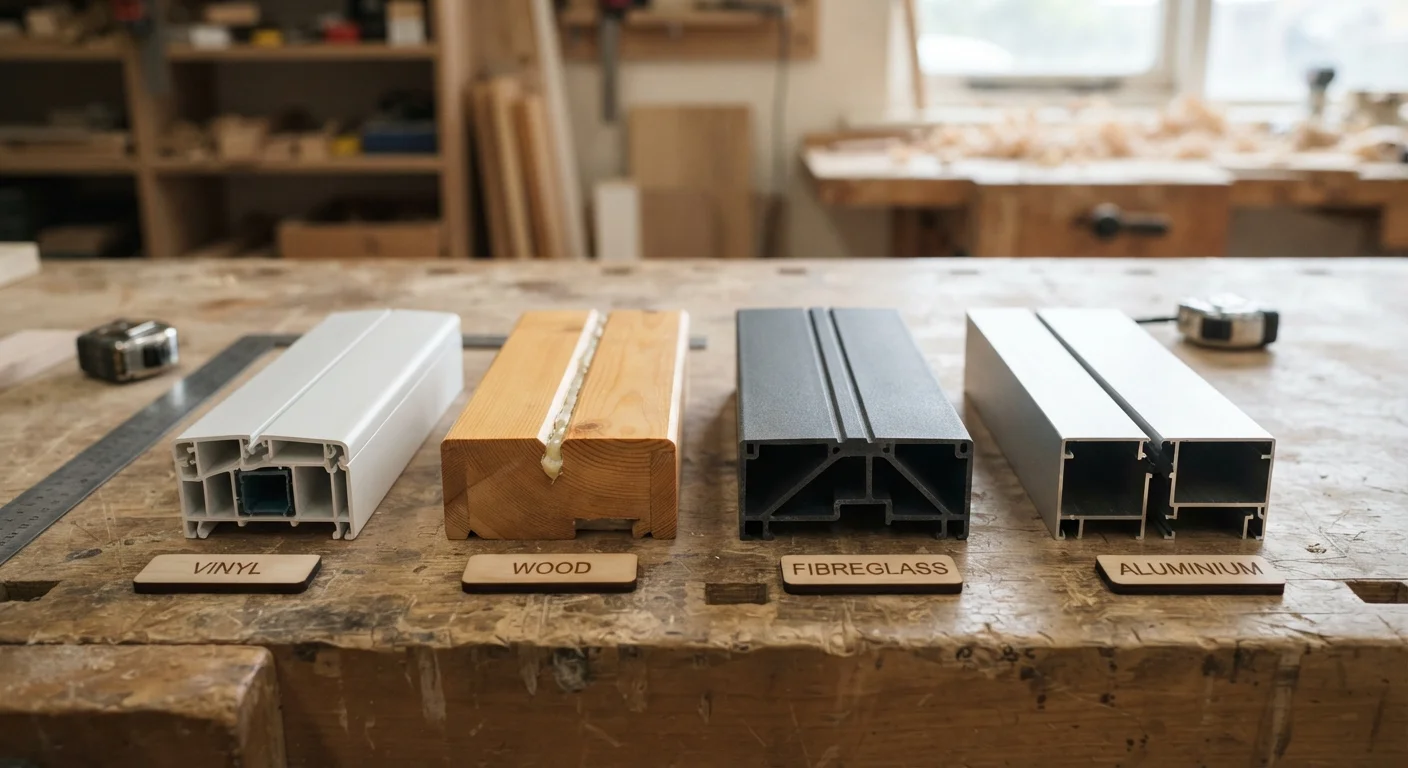
Vinyl frames (made from PVC) are the most widely installed in US residential projects. They are factory-formed, require no painting, and resist moisture well. Per-window installed costs typically fall in the lower-to-mid range of the market. The trade-off: color options are limited, and vinyl can expand and contract noticeably with extreme temperature swings.
Wood
Wood frames carry a higher price tag, reflecting both the cost of the material and the skilled labor needed for proper sealing and finishing. They are prized for their appearance and are often required in historic homes subject to local preservation codes. Without consistent maintenance — painting or staining every few years — wood is vulnerable to rot and moisture damage, which can add to lifetime costs. Our article on hidden costs that can raise a window replacement bill covers what happens when rotted wood frames are discovered mid-project.
Fiberglass
Fiberglass frames sit at the higher end of the price spectrum. They are dimensionally stable (meaning they expand and contract very little), hold paint well, and tend to outlast vinyl by a significant margin. Their higher upfront cost is often justified by lower long-term maintenance and strong thermal performance. For more on how frame material affects heat loss, see how frame materials affect energy performance.
Aluminum
Aluminum frames are durable and slim, making them common in commercial construction and mid-century modern homes. They are generally mid-priced, but aluminum conducts heat readily, which can reduce energy efficiency in colder climates unless a thermal break (an insulating barrier inside the frame) is included — a feature that adds cost.
Other Factors That Interact With Frame Cost
Frame material never operates in isolation. Several other variables will shift your final installed price:
- Window size and shape: Larger or non-rectangular openings cost more regardless of frame type. How non-standard openings change the price explains the specifics.
- Full-frame vs. insert replacement: If the existing frame stays in place, you pay for the insert only. If the frame must be removed, labor and material costs both rise. See our comparison of full-frame replacement vs. insert windows.
- Glazing package: The glass unit (double- or triple-pane, gas fills, coatings) is priced separately from the frame. A high-performance glass package added to an entry-level vinyl frame can push that window's cost well above a standard wood unit.
- Labor and local market rates: Installation labor varies by region and contractor. Frame complexity — particularly wood finishing or fiberglass painting — affects how long installation takes.
For a complete picture of every cost layer involved, the window replacement costs overview is a useful companion resource.
Comparing Value, Not Just Price
When reviewing quotes, ask contractors to itemize frame material cost, glazing cost, and labor separately. This makes it straightforward to compare like-for-like across estimates. A quote that bundles everything into a single per-window figure is harder to evaluate and may obscure where the money is actually going.
Think about how long you expect to stay in the home. A homeowner planning to sell within five years may weigh upfront cost differently than one planning a 20-year stay, where durability and maintenance savings become more meaningful. Neither choice is objectively correct — what matters is that the decision reflects your actual situation rather than a contractor's preference.
This article is for informational purposes only. Cost ranges vary by region, project scope, and market conditions. Always obtain multiple quotes from licensed contractors and verify local permit requirements before beginning work.