

Key Takeaways
Garden Window
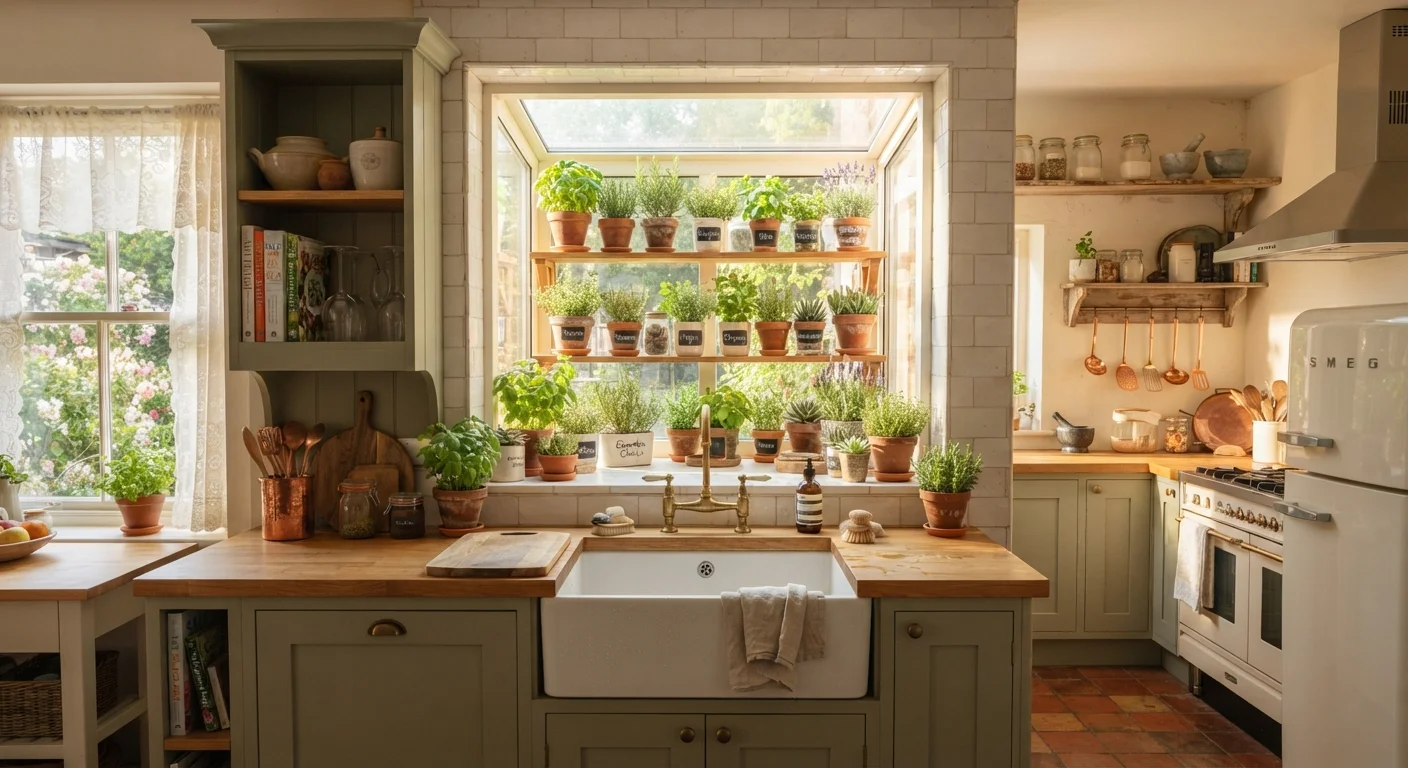
A garden window is a box-shaped window that projects outward from an exterior wall, typically 12 to 18 inches, creating a small enclosed shelf inside. It has a fixed glass top, two operable side vents, and a full front glass panel — together forming a three-dimensional frame that floods a small area with natural light from multiple angles. Most homeowners install them above kitchen sinks to grow herbs or display plants year-round.
Garden windows are sometimes called greenhouse windows. Unlike true bay windows, they are designed for a single rough opening and do not extend to the floor. Their side vents typically operate as small casement panels.
What a Garden Window Actually Looks Like
Unlike a flat window that sits flush with your wall, a garden window pushes outward. Think of it as a small glass box attached to your home — roughly the size of a bread box or slightly larger — with a sloped glass roof, a flat front pane, and two narrow side panels that can be opened for ventilation.
The sloped top is fixed glass, designed to let overhead sunlight pour in at an angle. The front panel is also fixed. The side vents, which typically operate on a hinge similar to a casement window, allow a small amount of fresh air to circulate.
Inside the home, the result is a shallow, sunlit ledge that protrudes into the room from the interior wall surface — typically only a few inches, since most of the projection is on the exterior side. That ledge is what makes the window useful for plants or display items.
Where Garden Windows Genuinely Work Well
The best-suited location is a kitchen wall that faces south or east, with no overhang, awning, or covered porch blocking overhead light. Above the kitchen sink is traditional for good reason: natural light while doing dishes, herbs within arm's reach, and a south-facing exposure that keeps plants thriving through winter months.
Beyond the kitchen, opportunities narrow quickly. A home office or craft room with a clear exterior wall could work if you actually want a dedicated plant shelf. But garden windows are purpose-built for their function — if that function doesn't match your room, a different style will serve you better.
Check Your Wall's Sun Exposure First
Before requesting quotes, spend a few days noting how much direct sunlight reaches the intended wall at different times of day. A garden window on a north-facing or heavily shaded wall will receive far less light than its design intends — which defeats the main purpose of installing one.
Understanding how window shape affects natural light room by room can help you confirm whether a garden window's multi-angle glazing actually solves your light problem — or whether a simpler option would achieve the same result.
Limitations Worth Understanding Before You Commit
Garden windows come with trade-offs that aren't always obvious in a showroom.
- Weather exposure: The projecting frame and multiple seams create more potential entry points for water if not properly installed and maintained. Flashing and weatherproofing quality matter significantly.
- Energy performance: More glass surface, more seams, and a projecting structure mean garden windows tend to transfer heat more readily than flat double-pane windows. This isn't a reason to avoid them, but it's worth factoring in. See our overview on energy-efficient windows for broader context.
- Installation complexity: The exterior projection requires structural support and careful flashing. This is not a straightforward swap for an existing flat window — expect more labor time and cost than a standard replacement.
- Ventilation limits: The side vents are modest in size. If airflow is a priority, awning or hopper windows are better suited to the job.
What to Ask a Contractor Before Moving Forward
Before scheduling installation, a few targeted questions will help you make a confident decision:
- Does my wall framing support the projection? Some walls require additional structural work before a projecting window can be safely mounted.
- What flashing and weatherproofing approach do you use? Poor sealing is the most common cause of water infiltration around garden windows. A contractor should have a clear answer.
- What glazing options are available? Double-pane, low-emissivity (low-e) coatings, and gas fills all affect how much heat the window gains and loses. Ask what's included in the quoted price.
- Are permits required? Adding a projecting window often counts as a structural modification. Permit requirements vary by jurisdiction — confirm with your contractor and local building department before work begins.
Garden windows occupy a specific niche. When the location is right and the goal is clear, they deliver something no flat window can — a small, living, sunlit corner that belongs entirely to the gardener in the household. When the fit is off, however, a picture window or another style may offer more value with less complexity.
This article is for informational purposes only. Installation requirements, costs, and code rules vary by location. Consult a licensed contractor and your local building department before beginning any window replacement project.